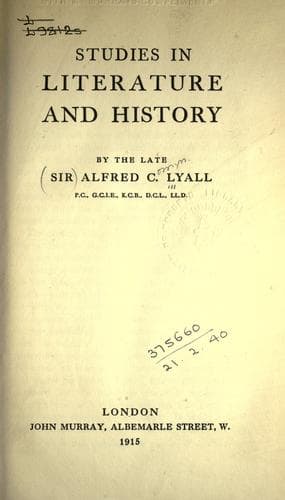
Studies in Literature and HistoryLyall, Alfred C., Sir
Religion
Studies in Literature and History
Lyall, Alfred C., Sir
English literature; History; Literature; Religion; Utilitarianism
The English aristocracy, in fact, were actually doing the country's
business, though they were doing it badly, and paid themselves much
too highly for very indifferent administration. Yet the English nation
acquiesced in the system, because the middle classes were growing rich
and prosperous, and the State interfered very little with their
private affairs. To this general statement of the case we agree; but
we may point out that in terming our aristocracy a privileged class
one material distinction has been passed over. For whereas the French
_noblesse_ constituted a caste partly exempted by birthright from the
general taxation, and vested with certain vexatious rights to which no
duties corresponded, the English aristocracy possessed legally no
privileges at all. It was not an exclusive order, but an upper class
that was constantly recruited, being open to all successful men; and
such a governing body is naturally indifferent to reforms, because it
is very little affected by administrative imperfections or abuses.
Pauperism and ignorance may fester long among the masses before
wealthy and prosperous rulers discover that the interests of their own
class are imperilled; the state of prisons does not concern them
personally; and so long as life and property are fairly secure, they
care little about an efficient police. The Englishman of whom a
Frenchman reported with amazement that he consoled himself for having
been robbed by the reflection that there were no policemen in his
country, must have belonged to this comfortable class. And the
inveterate conservation of abuses in the Church, the Law, and the Army
may be partially explained in a similar way. In France the Church and
the army were really privileged bodies: the vast ecclesiastical
revenues were protected from taxation, and the commissioned ranks of
the army were reserved for the _noblesse_; the French parliaments were
close magisterial corporations. In England these were all open
professions, with no special fiscal rights or social limitations; the
prizes were available for general competition, and as every one had a
chance of winning them by interest or even merit, there was no
formidable outcry against the system.
Public-domain text, read in full here on John Shaqi.
Reviews
Reviews
No reviews yet
Be the first to share your thoughts on this work.
Elsewhere in the archive
Join the Discussion
Join the discussion
Sign in to leave a comment or review.
Sign InorCreate an account