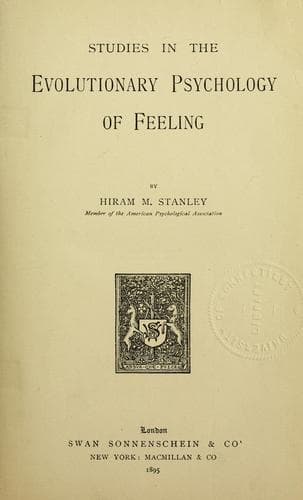
Studies in the Evolutionary Psychology of FeelingStanley, Hiram Miner
Philosophy
Studies in the Evolutionary Psychology of Feeling
Stanley, Hiram Miner
Emotions
errors, faults, and sins.
As to the origin of grief, we may say with confidence that it is
tolerably late, and certainly subsequent to anger and hate and like
reactions. Under certain circumstances sorrow must be accounted a more
favourable reaction than these. Rage is certainly impotent and useless
on many occasions of recalled injury, and rage is besides a very intense
emotion and expensive of energy. The general law in the development of
emotion is toward milder, more economical, and more permanent forms, and
then it is that sorrow must at some time have originated under the
demands of life, and been preserved and developed under natural
selection. Sorrow most probably originated as supplanting rage at the
view or remembrance of injury done. In young children we often see rage
mingled with the first manifestation of grief, and but slowly is the
rage eliminated and pure grief attained. Sorrow exercises its function
where rage is useless. The child cries over spilled milk partly from
rage, partly from grief, but such mishaps will tend more and more to be
attended by grief only, as the better and more economical reaction.
Further, in a certain range of cases, sorrow in its manifestations
serves to appease revenger, and sincere regret, unmistakably expressed,
often saves the wrong-doer an equivalent harm. This form of sorrow
function is distinctly cultivated in the education of children where
they are taught to feel sorry for faults if they would be forgiven and
escape punishment.
Public-domain text, read in full here on John Shaqi.
Reviews
Reviews
No reviews yet
Be the first to share your thoughts on this work.
Elsewhere in the archive
Join the Discussion
Join the discussion
Sign in to leave a comment or review.
Sign InorCreate an account