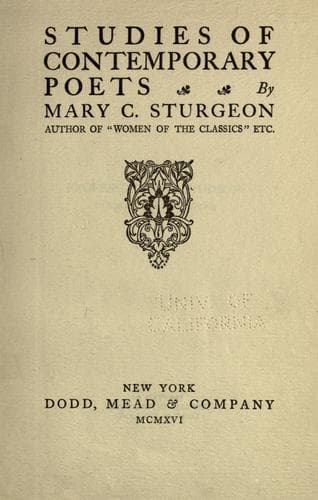
English poetry -- 20th century -- History and criticism
"I have hunted no deer since yester year, I have harried no
neighbour's cattle,
I have wooed no love, I have joined no game, save the kingly game of
battle;
The Danes were my prey by night and day, in their forts of hill and
hollow,
And I come from the desert-lands alone, since none are alive to
follow.
Some were slain on the plundered plain, and some in the midnight
marching;
Some were lost in the winter floods, and some by the fever parching;
Some have perished by wounds of spears, and some by the shafts of
bowmen;
And some by hunger and some by thirst, and all are dead; but they
slaughtered first
Their tenfold more of their foemen."
The King impulsively offers him gifts for a reward, but Brian declines
them:
"I want no cattle from out your herds, no share of your shining
treasure;
But grant me now"--and he turned to look on the listening warriors'
faces--
"A hundred more of the clan Dal Cas, to follow me over plain and
pass:
To die, as fitteth the brave Dal Cas, at war with the Outland
races."
It must not be supposed, however, that these poets are working solely
upon romantic themes, more or less in the epic manner. On the contrary,
direct treatment of the saga is declining, even with the poets who, like
those we have named, were formerly preoccupied with it. Mr Cousins'
volume of 1915 is sharply symptomatic of the change. Subjects of more
social and more immediate interest are engaging attention, and legendary
material is passing into a phase of allusion and symbol. Concurrently,
there is a development of the pure lyric which gives great promise,
being sound and sweet and vigorous. It has all the signs of vitality,
drawing its inspiration directly from life, keeping close to the earth,
as it were, and often dealing with the large and simple things of
existence.
One may not make too precise a claim here for affiliation with the
literary revival; but observing the movement broadly, it would appear
that this is its more popular manifestation, springing out of the
devotion to the old language of the country, its folklore and the life
of its people. That current of the stream would touch actual existence
much more closely than æsthetic or academic study; and while one might
regard Lady Gregory and Mr Yeats as the pioneers of the movement on the
specifically literary side, on the other hand there are Dr Hyde, A. E.,
and others, whose influence must have counted largely in these new
lyrics of life.
Public-domain text, read in full here on John Shaqi.
Reviews
Reviews
No reviews yet
Be the first to share your thoughts on this work.
Elsewhere in the archive
Join the Discussion
Join the discussion
Sign in to leave a comment or review.
Sign InorCreate an account