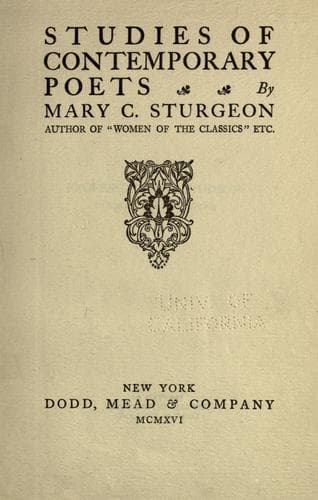
English poetry -- 20th century -- History and criticism
The elements of that passage, and cumulatively to its end, are genuinely
romantic: the heightened mood, the night setting of darkness and
solemnity, the wondering and regretful gaze into the past, and the sense
of eternal mystery. So, too, though from a very different aspect, is the
amazing power of the mad scene in this poem. The fierce zest of it
courses along a flaming pathway and is as exhilarating in its speed and
vigour as any romantic masterpiece in the older manner. It is difficult
to quote, in justice to the author, from so closely woven a texture; but
there is a short passage which illustrates over again the physical
development that we have already noted balancing mental and spiritual
qualities in this genius. It is the exultation of Kane in his
swiftness, as he rages through the streets with a crowd toiling after
him.
The men who don't know to the root
The joy of being swift of foot,
Have never known divine and fresh
The glory of the gift of flesh,
Nor felt the feet exult, nor gone
Along a dim road, on and on,
Knowing again the bursting glows,
The mating hare in April knows,
Who tingles to the pads with mirth
At being the swiftest thing on earth.
O, if you want to know delight,
Run naked in an autumn night,
And laugh, as I laughed then....
The sensuous ecstasy of that is as strongly contrasted with the
pensiveness of the previous scene at the window as it is with the gentle
rhapsody which follows the drunkard's conversion. Of that rhapsody what
can one say? It is a piece about which words seem inadequate, or totally
futile. Perhaps one comment may be made, however. Reading it for the
twentieth time, and marvelling once more at the religious emotion which,
in its naïve sweetness and intensity is so strange an apparition in our
day, my mind flew, with a sudden sense of enlightenment, back to
Chaucer. At first, reflection made the transition seem abrupt to
absurdity; but the connexion had no doubt been helped subconsciously by
the apt fragment from Lydgate on the fly-leaf of this poem. Thence it
was but a step to the large humanity, the sympathy and tolerance and
generosity, the wide understanding bred of practical knowledge of men
and affairs, of the father of poets. An actual likeness gleamed which
was at the same time piquant and satisfying. For, first, it stimulated
curiosity regarding the use by this poet of the Chaucerian rhyme-royal
in three of these long poems. That evinces a leaning on traditional form
rather curious in so independent an artist. And then it teased the mind
with suggestions that led out of range--about mental affinities, and the
different manifestations of the same type of genius, born into ages so
far apart.
Public-domain text, read in full here on John Shaqi.
Reviews
Reviews
No reviews yet
Be the first to share your thoughts on this work.
Elsewhere in the archive
Join the Discussion
Join the discussion
Sign in to leave a comment or review.
Sign InorCreate an account