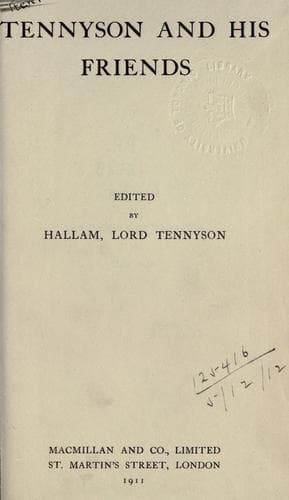
Tennyson, Alfred Tennyson, Baron, 1809-1892 -- Friends and associates
The poem, in fact, strikes all the highest lyrical chords, and we are
disposed to think that all of them are by no means touched with equal
skill. Possibly, the sustained and perfect execution of such a varied
composition would be too arduous a task for any artist. It is difficult
for the reader to adjust his mind to the changes of mood and motive which
succeed each other rapidly, and often abruptly, within the compass of so
short a piece; ranging from the almost melodramatic horror of the opening
stanzas to the passionate and joyous melodies of the middle part; sinking
into a wild wailing, and closing with the trumpet sounds of war. Yet every
one will now acknowledge that some passages in "Maud" are immortal, and
that the English language contains none more beautiful than the very best
of them.
The letters in the _Memoir_ are selected from upwards of forty thousand,
and at this period we have many of singular interest. One from Mrs. Vyner,
a stranger, touched the Poet deeply. Ruskin writes with reserve, as well
he might, about the edition of the poems illustrated by Rossetti, Millais,
and others:
I believe, in fact, that good pictures never can be; they are always
another poem, subordinate, but wholly different from the poet's
conception, and serve chiefly to show the reader how variously the
same verses may affect various minds. But these woodcuts will be of
much use in making people think and puzzle a little; art was getting
quite a matter of form in book illustrations, and it does not so much
matter whether any given vignette is right or not, as whether it
contains thought or not, still more whether it contains any kind of
plain facts. If people have no sympathy with St. Agnes, or if people,
as soon as they get a distinct idea of a living girl who probably got
scolded for dropping her candle-wax about the convent-stairs, and
caught cold by looking too long out of the window in her bedgown,
feel no true sympathy with her, they can have no sympathy in them.
Elizabeth Barrett Browning sends a warm-hearted letter; and Jowett, who
enjoyed giving advice, evidently sat him down readily to reply when Mrs.
Tennyson asked whether he could suggest any subjects for poetry:
I often fancy that the critical form of modern literature is like the
rhetorical one which overlaid ancient literature, and will be regarded
as that is, at its true worth in after times. One drop of natural
feeling in poetry, or the true statement of a single new fact, is
already felt to be of more value than all the critics put together.
Four "Idylls" came out in 1859, to be rapidly and largely taken up by the
English public, with many congratulations from personal friends. Thackeray
sends, after reading them, a letter full of his characteristic humour and
cordiality:
Public-domain text, read in full here on John Shaqi.
Reviews
Reviews
No reviews yet
Be the first to share your thoughts on this work.
Elsewhere in the archive
Join the Discussion
Join the discussion
Sign in to leave a comment or review.
Sign InorCreate an account