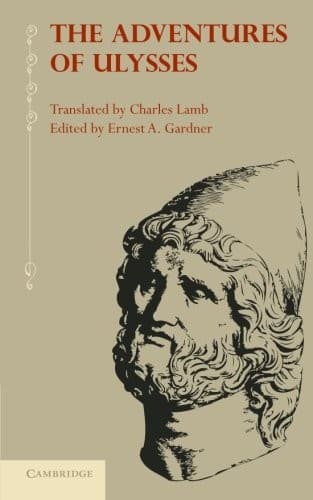
Homer. Odyssey -- Adaptations; Odysseus, King of Ithaca (Mythological character) -- Juvenile literature
Then saw he other females: Tyro, who when she lived was the paramour of
Neptune, and by him had Pelias and Neleus. Antiope, who bore two like sons
to Jove, Amphion and Zethus, founders of Thebes. Alcmena, the mother of
Hercules, with her fair daughter, afterwards her daughter-in-law, Megara.
There also Ulysses saw Jocasta, the unfortunate mother and wife of
Oedipus; who, ignorant of kin, wedded with her son, and when she had
discovered the unnatural alliance, for shame and grief hanged herself. He
continued to drag a wretched life above the earth, haunted by the dreadful
Furies. There was Leda, the wife of Tyndarus, the mother of the beautiful
Helen, and of the two brave brothers Castor and Pollux, who obtained this
grace from Jove, that, being dead, they should enjoy life alternately,
living in pleasant places under the earth. For Pollux had prayed that his
brother Castor, who was subject to death, as the son of Tyndarus, should
partake of his own immortality, which he derived from an immortal sire.
This the Fates denied; therefore Pollux was permitted to divide his
immortality with his brother Castor, dying and living alternately.
There was Iphimedia, who bore two sons to Neptune that were giants, Otus
and Ephialtes: Earth in her prodigality never nourished bodies to such
portentous size and beauty as these two children were of, except Orion. At
nine years old they had imaginations of climbing to heaven to see what the
gods were doing; they thought to make stairs of mountains, and were for
piling Ossa upon Olympus, and setting Pelion upon that, and had perhaps
performed it, if they had lived till they were striplings; but they were
cut off by death in the infancy of their ambitious project. Phaedra was
there, and Procris, and Ariadne, mournful for Theseus's desertion, and
Maera, and Clymene, and Eryphile, who preferred gold before wedlock faith.
But now came a mournful ghost, that late was Agamemnon, son of Atreus, the
mighty leader of all the host of Greece and their confederate kings that
warred against Troy. He came with the rest to sip a little of the blood at
that uncomfortable banquet. Ulysses was moved with compassion to see him
among them, and asked him what untimely fate had brought him there, if
storms had overwhelmed him coming from Troy, or if he had perished in some
mutiny by his own soldiers at a division of the prey.
"By none of these," he replied, "did I come to my death; but slain at a
banquet to which I was invited by Aegisthus after my return home. He
conspiring with my adulterous wife, they laid a scheme for my destruction,
training me forth to a banquet as an ox goes to the slaughter, and, there
surrounding me, they slew me with all my friends about me.
Public-domain text, read in full here on John Shaqi.
Reviews
Reviews
No reviews yet
Be the first to share your thoughts on this work.
Join the Discussion
Join the discussion
Sign in to leave a comment or review.
Sign InorCreate an account