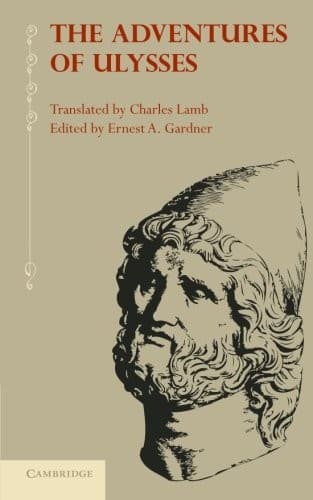
Homer. Odyssey -- Adaptations; Odysseus, King of Ithaca (Mythological character) -- Juvenile literature
"Clytemnestra, my wicked wife, forgetting the vows which she swore to me
in wedlock, would not lend a hand to close my eyes in death. But nothing
is so heaped with impieties as such a woman, who would kill her spouse
that married her a maid. When I brought her home to my house a bride, I
hoped in my heart that she would be loving to me and to my children. Now,
her black treacheries have cast a foul aspersion on her whole sex. Blessed
husbands will have their loving wives in suspicion for her bad deeds."
"Alas!" said Ulysses, "there seems to be a fatality in your royal house of
Atreus, and that they are hated of Jove for their wives. For Helen's sake,
your brother Menelaus's wife, what multitudes fell in the wars of Troy!"
Agamemnon replied, "For this cause be not thou more kind than wise to any
woman. Let not thy words express to her at any time all that is in thy
mind, keep still some secrets to thyself. But thou by any bloody
contrivances of thy wife never needst fear to fall. Exceeding wise she is,
and to her wisdom she has a goodness as eminent; Icarius's daughter,
Penelope the chaste: we left her a young bride when we parted from our
wives to go to the wars, her first child sucking at her breast, the young
Telemachus, whom you shall see grown up to manhood on your return, and he
shall greet his father with befitting welcomes. My Orestes, my dear son, I
shall never see again. His mother has deprived his father of the sight of
him, and perhaps will slay him as she slew his sire. It is now no world to
trust a woman in. But what says fame? is my son yet alive? lives he in
Orchomen, or in Pylus, or is he resident in Sparta, in his uncle's court?
As yet, I see, divine Orestes is not here with me."
To this Ulysses replied that he had received no certain tidings where
Orestes abode, only some uncertain rumours which he could not report for
truth.
While they held this sad conference, with kind tears striving to render
unkind fortunes more palatable, the soul of great Achilles joined them.
"What desperate adventure has brought Ulysses to these regions," said
Achilles; "to see the end of dead men, and their foolish shades?"
Ulysses answered him that he had come to consult Tiresias respecting his
voyage home. "But thou, O son of Thetis," said he, "why dost thou
disparage the state of the dead? Seeing that as alive thou didst surpass
all men in glory, thou must needs retain thy pre-eminence here below: so
great Achilles triumphs over death."
But Achilles made reply that he had much rather be a peasant slave upon
the earth than reign over all the dead. So much did the inactivity and
slothful condition of that state displease his unquenchable and restless
spirit. Only he inquired of Ulysses if his father Peleus were living, and
how his son Neoptolemus conducted himself.
Public-domain text, read in full here on John Shaqi.
Reviews
Reviews
No reviews yet
Be the first to share your thoughts on this work.
Join the Discussion
Join the discussion
Sign in to leave a comment or review.
Sign InorCreate an account