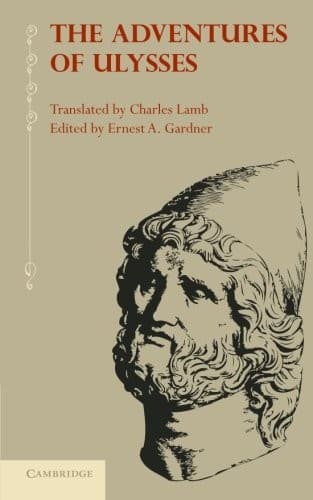
Homer. Odyssey -- Adaptations; Odysseus, King of Ithaca (Mythological character) -- Juvenile literature
Then Ulysses saw a throne on which was placed a judge distributing
sentence. He that sat on the throne was Minos, and he was dealing out just
judgments to the dead. He it is that assigns them their place in bliss or
woe.
Then came by a thundering ghost, the large-limbed Orion, the mighty
hunter, who was hunting there the ghosts of the beasts which he had
slaughtered in desert hills upon the earth. For the dead delight in the
occupations which pleased them in the time of their living upon the earth.
There was Tityus suffering eternal pains because he had sought to violate
the honour of Latona, as she passed from Pytho into Panopeus. Two vultures
sat perpetually preying upon his liver with their crooked beaks; which as
fast as they devoured, is forever renewed; nor can he fray them away with
his great hands.
There was Tantalus, plagued for his great sins, standing up to his chin in
water, which he can never taste, but still as he bows his head, thinking
to quench his burning thirst, instead of water he licks up unsavory dust.
All fruits pleasant to the sight, and of delicious flavor, hang in ripe
clusters about his head, seeming as though they offered themselves to be
plucked by him; but when he reaches out his hand, some wind carries them
far out of his sight into the clouds; so he is starved in the midst of
plenty by the righteous doom of Jove, in memory of that inhuman banquet at
which the sun turned pale, when the unnatural father served up the limbs
of his little son in a dish, as meat for his divine guests.
There was Sisyphus, that sees no end to his labours. His punishment is, to
be forever rolling up a vast stone to the top of a mountain, which, when
it gets to the top, falls down with a crushing weight, and all his work is
to be begun again. He was bathed all over in sweat, that reeked out a
smoke which covered his head like a mist. His crime had been the revealing
of state secrets.
There Ulysses saw Hercules--not that Hercules who enjoys immortal life in
heaven among the gods, and is married to Hebe or Youth; but his shadow,
which remains below. About him the dead flocked as thick as bats, hovering
around, and cuffing at his head: he stands with his dreadful bow, ever in
the act to shoot.
There also might Ulysses have seen and spoken with the shades of Theseus,
and Pirithous, and the old heroes; but he had conversed enough with
horrors; therefore, covering his face with his hands, that he might see no
more spectres, he resumed his seat in his ship, and pushed off. The bark
moved of itself without the help of any oar, and soon brought him out of
the regions of death into the cheerful quarters of the living, and to the
island of Aeaea, whence he had set forth.
CHAPTER THREE
The Song of the Sirens.--Scylla and Charybdis.--The Oxen of the Sun.--The
Judgment.--The Crew Killed by Lightning.
Public-domain text, read in full here on John Shaqi.
Reviews
Reviews
No reviews yet
Be the first to share your thoughts on this work.
Join the Discussion
Join the discussion
Sign in to leave a comment or review.
Sign InorCreate an account