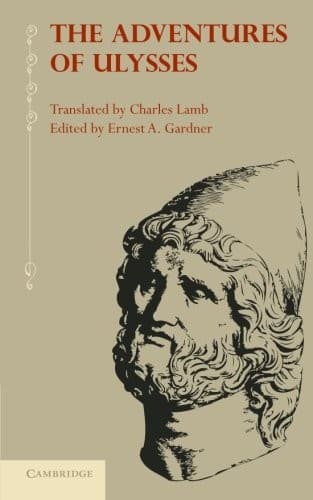
Homer. Odyssey -- Adaptations; Odysseus, King of Ithaca (Mythological character) -- Juvenile literature
Of Peleus Ulysses could tell him nothing; but of Neoptolemus he thus bore
witness: "From Scyros I convoyed your son by sea to the Greeks: where I
can speak of him, for I knew him. He was chief in council, and in the
field. When any question was proposed, so quick was his conceit in the
forward apprehension of any case, that he ever spoke first, and was heard
with more attention than the older heads. Only myself and aged Nestor
could compare with him in giving advice. In battle I cannot speak his
praise, unless I could count all that fell by his sword. I will only
mention one instance of his manhood. When we sat hid in the belly of the
wooden horse, in the ambush which deceived the Trojans to their
destruction, I, who had the management of that stratagem, still shifted my
place from side to side to note the behaviour of our men. In some I marked
their hearts trembling, through all the pains which they took to appear
valiant, and in others tears, that in spite of manly courage would gush
forth. And to say truth, it was an adventure of high enterprise, and as
perilous a stake as was ever played in war's game. But in him I could not
observe the least sign of weakness, no tears nor tremblings, but his hand
still on his good sword, and ever urging me to set open the machine and
let us out before the time was come for doing it; and when we sallied out
he was still first in that fierce destruction and bloody midnight
desolation of king Priam's city."
This made the soul of Achilles to tread a swifter pace, with high-raised
feet, as he vanished away, for the joy which he took in his son being
applauded by Ulysses.
A sad shade stalked by, which Ulysses knew to be the ghost of Ajax, his
opponent, when living, in that famous dispute about the right of
succeeding to the arms of the deceased Achilles. They being adjudged by
the Greeks to Ulysses, as the prize of wisdom above bodily strength, the
noble Ajax in despite went mad, and slew himself. The sight of his rival
turned to a shade by his dispute so subdued the passion of emulation in
Ulysses that for his sake he wished that judgment in that controversy had
been given against himself, rather than so illustrious a chief should have
perished for the desire of those arms which his prowess (second only to
Achilles in fight) so eminently had deserved. "Ajax," he cried, "all the
Greeks mourn for thee as much as they lamented for Achilles. Let not thy
wrath burn forever, great son of Telamon. Ulysses seeks peace with thee,
and will make any atonement to thee that can appease thy hurt spirit." But
the shade stalked on, and would not exchange a word with Ulysses, though
he prayed it with many tears and many earnest entreaties. "He might have
spoke to me," said Ulysses, "since I spoke to him; but I see the
resentments of the dead are eternal."
Public-domain text, read in full here on John Shaqi.
Reviews
Reviews
No reviews yet
Be the first to share your thoughts on this work.
Join the Discussion
Join the discussion
Sign in to leave a comment or review.
Sign InorCreate an account