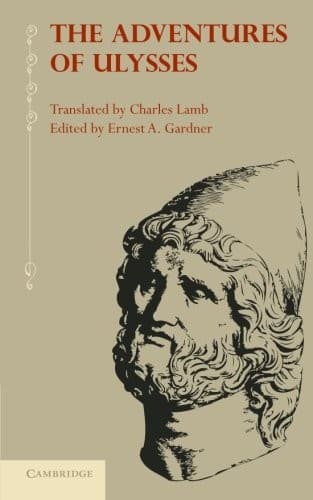
Homer. Odyssey -- Adaptations; Odysseus, King of Ithaca (Mythological character) -- Juvenile literature
Thence they set sail, sad at heart, yet something cheered that with such
fearful odds against them they had not all been utterly destroyed. A
dreadful tempest ensued, which for two nights and two days tossed them
about, but the third day the weather cleared, and they had hopes of a
favourable gale to carry them to Ithaca; but, as they doubled the Cape of
Malea, suddenly a north wind arising drove them back as far as Cythera.
After that, for the space of nine days, contrary winds continued to drive
them in an opposite direction to the point to which they were bound, and
the tenth day they put in at a shore where a race of men dwell that are
sustained by the fruit of the lotos-tree. Here Ulysses sent some of his
men to land for fresh water, who were met by certain of the inhabitants,
that gave them some of their country food to eat--not with any ill
intention towards them, though in the event it proved pernicious; for,
having eaten of this fruit, so pleasant it proved to their appetite that
they in a minute quite forgot all thoughts of home, or of their
countrymen, or of ever returning back to the ships to give an account of
what sort of inhabitants dwelt there, but they would needs stay and live
there among them, and eat of that precious food forever; and when Ulysses
sent other of his men to look for them, and to bring them back by force,
they strove, and wept, and would not leave their food for heaven itself,
so much the pleasure of that enchanting fruit had bewitched them. But
Ulysses caused them to be bound hand and foot, and cast under the hatches;
and set sail with all possible speed from that baneful coast, lest others
after them might taste the lotos, which had such strange qualities to make
men forget their native country and the thoughts of home.
Coasting on all that night by unknown and out-of-the-way shores, they came
by daybreak to the land where the Cyclops dwell, a sort of giant shepherds
that neither sow nor plough, but the earth untilled produces for them rich
wheat and barley and grapes, yet they have neither bread nor wine, nor
know the arts of cultivation, nor care to know them; for they live each
man to himself, without law or government, or anything like a state or
kingdom; but their dwellings are in caves, on the steep heads of
mountains; every man's household governed by his own caprice, or not
governed at all; their wives and children as lawless as themselves, none
caring for others, but each doing as he or she thinks good. Ships or boats
they have none, nor artificers to make them, no trade or commerce, or wish
to visit other shores; yet they have convenient places for harbours and
for shipping. Here Ulysses with a chosen party of twelve followers landed,
to explore what sort of men dwelt there, whether hospitable and friendly
to strangers, or altogether wild and savage, for as yet no dwellers
appeared in sight.
Public-domain text, read in full here on John Shaqi.
Reviews
Reviews
No reviews yet
Be the first to share your thoughts on this work.
Join the Discussion
Join the discussion
Sign in to leave a comment or review.
Sign InorCreate an account