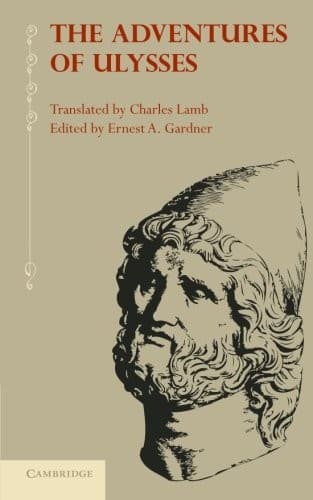
Homer. Odyssey -- Adaptations; Odysseus, King of Ithaca (Mythological character) -- Juvenile literature
When it was daylight, Alcinous caused it to be proclaimed by the heralds
about the town that there was come to the palace a stranger, shipwrecked
on their coast, that in mien and person resembled a god; and inviting all
the chief people of the city to come and do honour to the stranger.
The palace was quickly filled with guests, old and young, for whose cheer,
and to grace Ulysses more, Alcinous made a kingly feast with banquetings
and music. Then, Ulysses being seated at a table next the king and queen,
in all men's view, after they had feasted Alcinous ordered Demodocus, the
court-singer, to be called to sing some song of the deeds of heroes, to
charm the ear of his guest. Demodocus came and reached his harp, where it
hung between two pillars of silver; and then the blind singer, to whom, in
recompense of his lost sight, the muses had given an inward discernment, a
soul and a voice to excite the hearts of men and gods to delight, began in
grave and solemn strains to sing the glories of men highliest famed. He
chose a poem whose subject was The Stern Strife stirred up between Ulysses
and Great Achilles, as at a banquet sacred to the gods, in dreadful
language, they expressed their difference; while Agamemnon sat rejoiced in
soul to hear those Grecians jar; for the oracle in Pytho had told him that
the period of their wars in Troy should then be, when the kings of Greece,
anxious to arrive at the wished conclusion, should fall to strife, and
contend which must end the war, force or stratagem.
This brave contention he expressed so to the life, in the very words which
they both used in the quarrel, as brought tears into the eyes of Ulysses
at the remembrance of past passages of his life, and he held his large
purple weed before his face to conceal it. Then craving a cup of wine, he
poured it out in secret libation to the gods, who had put into the mind of
Demodocus unknowingly to do him so much honour. But when the moving poet
began to tell of other occurrences where Ulysses had been present, the
memory of his brave followers who had been with him in all difficulties,
now swallowed up and lost in the ocean, and of those kings that had fought
with him at Troy, some of whom were dead, some exiles like himself, forced
itself so strongly upon his mind that forgetful where he was he sobbed
outright with passion: which yet he restrained, but not so cunningly but
Alcinous perceived it and without taking notice of it to Ulysses,
privately gave signs that Demodocus should cease from his singing.
Public-domain text, read in full here on John Shaqi.
Reviews
Reviews
No reviews yet
Be the first to share your thoughts on this work.
Join the Discussion
Join the discussion
Sign in to leave a comment or review.
Sign InorCreate an account