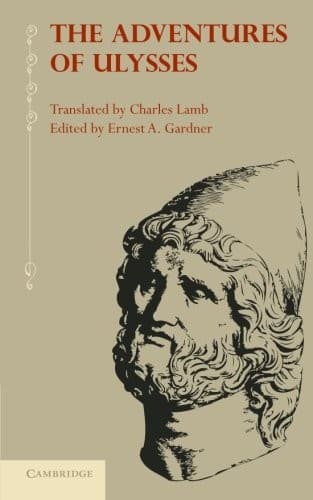
Homer. Odyssey -- Adaptations; Odysseus, King of Ithaca (Mythological character) -- Juvenile literature
"Be he what he may," said Telemachus, "I accept him at your hands. But
where I should bestow him I know not, seeing that in the palace his age
would not exempt him from the scorn and contempt which my mother's suitors
in their light minds would be sure to fling upon him: a mercy if he
escaped without blows; for they are a company of evil men, whose
profession is wrongs and violence."
Ulysses answered: "Since it is free for any man to speak in presence of
your greatness, I must say that my heart puts on a wolfish inclination to
tear and to devour, hearing your speech, that these suitors should with
such injustice rage, where you should have the rule solely. What should
the cause be? do you wilfully give way to their ill manners? or has your
government been such as has procured ill-will towards you from your
people? or do you mistrust your kinsfolk and friends in such sort as
without trial to decline their aid? A man's kindred are they that he might
trust to when extremities run high."
Telemachus replied: "The kindred of Ulysses are few. I have no brothers to
assist me in the strife. But the suitors are powerful in kindred and
friends. The house of old Arcesius has had this fate from the heavens,
that from old it still has been supplied with single heirs. To Arcesius,
Laertes only was born, from Laertes descended only Ulysses, from Ulysses I
alone have sprung, whom he left so young that from me never comfort arose
to him. But the end of all rests in the hands of the gods."
Then Eumaeus departing to see to some necessary business of his herds,
Minerva took a woman's shape, and stood in the entry of the door, and was
seen to Ulysses, but by his son she was not seen, for the presences of the
gods are invisible save to those to whom they will to reveal themselves.
Nevertheless, the dogs which were about the door saw the goddess, and
durst not bark, but went crouching and licking of the dust for fear. And
giving signs to Ulysses that the time was now come in which he should make
himself known to his son, by her great power she changed back his shape
into the same which it was before she transformed him; and Telemachus, who
saw the change, but nothing of the manner by which it was effected, only
he saw the appearance of a king in the vigour of his age where but just
now he had seen a worn and decrepit beggar, was struck with fear, and
said, "Some god has done this house this honour," and he turned away his
eyes, and would have worshipped. But his father permitted not, but said,
"Look better at me; I am no deity; why put you upon me the reputation of
godhead? I am no more but thy father: I am even he; I am that Ulysses by
reason of whose absence thy youth has been exposed to such wrongs from
injurious men." Then kissed he his son, nor could any longer refrain those
tears which he had held under such mighty restraint before, though they
would ever be forcing themselves out in spite of him; but now, as if their
Public-domain text, read in full here on John Shaqi.
Reviews
Reviews
No reviews yet
Be the first to share your thoughts on this work.
Join the Discussion
Join the discussion
Sign in to leave a comment or review.
Sign InorCreate an account