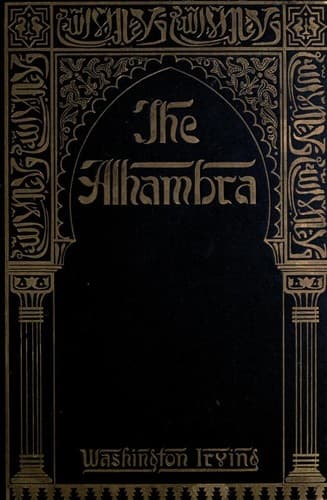
Verhalen over het gebouwencomplex in Granada, dat eigendom was van de laatste islamitische vorsten in Spanje.
The custom remained after the wars were at an end; and what originated
in necessity was kept up through ostentation. The wealth which flowed
into the country from conquests and discoveries fostered the passion for
princely establishments. According to magnificent old Spanish usage, in
which pride and generosity bore equal parts, a superannuated servant was
never turned off, but became a charge for the rest of his days; nay, his
children, and his children’s children, and often their relatives to the
right and left, became gradually entailed upon the family. Hence the
huge palaces of the Spanish nobility, which have such an air of empty
ostentation from the greatness of their size compared with the
mediocrity and scantiness of their furniture, were absolutely required,
in the golden days of Spain, by the patriarchal habits of their
possessors. They were little better than vast barracks for their
hereditary generations of hangers-on that battened at the expense of a
Spanish noble.
These patriarchal habits of the Spanish nobility have declined with
their revenues; though the spirit which prompted them remains, and wars
sadly with their altered fortunes. The poorest among them have always
some hereditary hangers-on, who live at their expense, and make them
poorer. Some who, like my neighbor the count, retain a modicum of their
once princely possessions, keep up a shadow of the ancient system, and
their estates are overrun and the produce consumed by generations of
idle retainers.
The count held estates in various parts of the kingdom, some including
whole villages; yet the revenues collected from them were comparatively
small; some of them, he assured me, barely fed the hordes of dependents
nestled upon them, who seemed to consider themselves entitled to live
rent-free and be maintained into the bargain, because their forefathers
had been so since time immemorial.
The Saint’s day of the old count gave me a glimpse into a Spanish
interior. For two or three days previous preparations were made for the
fête. Viands of all kinds were brought up from town, greeting the
olfactory nerves of the old invalid guards, as they were borne past them
through the Gate of Justice. Servants hurried officiously about the
courts; the ancient kitchen of the palace was again alive with the tread
of cooks and scullions, and blazed with unwonted fires.
When the day arrived I beheld the old count in patriarchal state, his
family and household around him, with functionaries who mismanaged his
estates at a distance and consumed the proceeds; while numerous old
worn-out servants and pensioners were loitering about the courts and
keeping within smell of the kitchen.
It was a joyous day in the Alhambra. The guests dispersed themselves
about the palace before the hour of dinner, enjoying the luxuries of its
courts and fountains, and embosomed gardens, and music and laughter
resounded through its late silent halls.
Public-domain text, read in full here on John Shaqi.
Reviews
Reviews
No reviews yet
Be the first to share your thoughts on this work.
Elsewhere in the archive
Join the Discussion
Join the discussion
Sign in to leave a comment or review.
Sign InorCreate an account