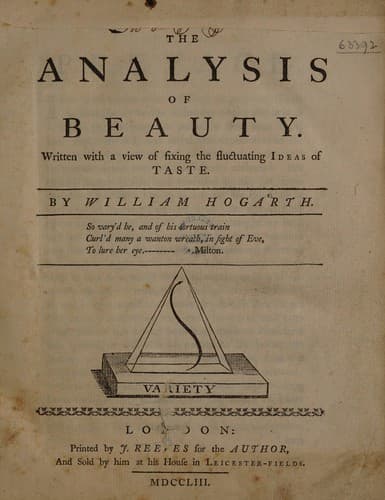
The Analysis of Beauty: Written with a view of fixing the fluctuating ideas of tasteHogarth, William
Philosophy
The Analysis of Beauty: Written with a view of fixing the fluctuating ideas of taste
Hogarth, William
Aesthetics -- Early works to 1800
SIMPLICITY (which I am last to speak of) in the disposition of a great
variety, is best accomplished by following nature's constant rule,
of dividing composition into three or five parts, or parcels, see
Chapter IV on simplicity: the painters accordingly divide theirs into
fore-ground, middle-ground, and distance or back-ground; which simple
and distinct quantities _mass_ together that variety which entertains
the eye; as the different parts of base, tenor, and treble, in a
composition in music, entertain the ear.
Let these principles be reversed, or neglected, the the light and shade
will appear as disagreeable as fig. [91 T p. II], whereas, was this to
be a composition of lights and shades only, properly disposed, tho'
ranged under no particular figures, it might still have the pleasing
effect of a picture. And here, as it would be endless to enter upon the
different effects of lights and shades on lucid and transparent bodies,
we shall leave them to the reader's observation, and so conclude this
chapter.
[Illustration: Fig. 91]
CHAPTER XIV.
_Of COLOURING_.
By the beauty of colouring, the painters mean that disposition of
colours on objects, together with their proper shades, which appear
at the same time both distinctly varied and artfully united, in
compositions of any kind; but, by way of pre-eminence, it is generally
understood of flesh-colour, when no other composition is named.
To avoid confusion, and having already said enough of retiring
shades, I shall now only describe the nature and effect of the prime
tint of flesh; for the composition of this, when rightly understood,
comprehends every thing that can be said of the colouring of all other
objects whatever.
And herein (as has been shewn in Chapter VIII, of the manner of
composing pleasing forms) the whole process will depend upon the art of
varying; i. e. upon an artful manner of varying every colour belonging
to flesh, under the direction of the six fundamental principles there
spoken of.
But before we proceed to shew in what manner these principles conduce
to this design, we shall take a view of nature's curious ways of
producing all sorts of complexions, which may help to further our
conception of the principles of varying colours, so as to see why they
cause the effect of beauty.
Public-domain text, read in full here on John Shaqi.
Reviews
Reviews
No reviews yet
Be the first to share your thoughts on this work.
Elsewhere in the archive
Join the Discussion
Join the discussion
Sign in to leave a comment or review.
Sign InorCreate an account