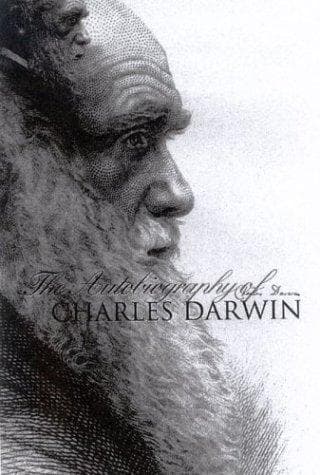
The Autobiography of Charles DarwinDarwin, Charles
Science
The Autobiography of Charles Darwin
Darwin, Charles
Darwin, Charles, 1809-1882; Darwin, Charles, 1809-1882. On the origin of species; Naturalists -- Great Britain -- Biography
I kept an exact record of every bird which I shot throughout the whole
season. One day when shooting at Woodhouse with Captain Owen, the
eldest son, and Major Hill, his cousin, afterwards Lord Berwick, both
of whom I liked very much, I thought myself shamefully used, for every
time after I had fired and thought that I had killed a bird, one of the
two acted as if loading his gun, and cried out, “You must not count
that bird, for I fired at the same time,” and the gamekeeper,
perceiving the joke, backed them up. After some hours they told me the
joke, but it was no joke to me, for I had shot a large number of birds,
but did not know how many, and could not add them to my list, which I
used to do by making a knot in a piece of string tied to a button-hole.
This my wicked friends had perceived.
How I did enjoy shooting! But I think that I must have been
half-consciously ashamed of my zeal, for I tried to persuade myself
that shooting was almost an intellectual employment; it required so
much skill to judge where to find most game and to hunt the dogs well.
One of my autumnal visits to Maer in 1827 was memorable from meeting
there Sir J. Mackintosh, who was the best converser I ever listened to.
I heard afterwards with a glow of pride that he had said, “There is
something in that young man that interests me.” This must have been
chiefly due to his perceiving that I listened with much interest to
everything which he said, for I was as ignorant as a pig about his
subjects of history, politics, and moral philosophy. To hear of praise
from an eminent person, though no doubt apt or certain to excite
vanity, is, I think, good for a young man, as it helps to keep him in
the right course.
My visits to Maer during these two or three succeeding years were quite
delightful, independently of the autumnal shooting. Life there was
perfectly free; the country was very pleasant for walking or riding;
and in the evening there was much very agreeable conversation, not so
personal as it generally is in large family parties, together with
music. In the summer the whole family used often to sit on the steps of
the old portico, with the flower-garden in front, and with the steep
wooded bank opposite the house reflected in the lake, with here and
there a fish rising or a water-bird paddling about. Nothing has left a
more vivid picture on my mind than these evenings at Maer. I was also
attached to and greatly revered my Uncle Jos; he was silent and
reserved, so as to be a rather awful man; but he sometimes talked
openly with me. He was the very type of an upright man, with the
clearest judgment. I do not believe that any power on earth could have
made him swerve an inch from what he considered the right course. I
used to apply to him in my mind the well-known ode of Horace, now
forgotten by me, in which the words “nec vultus tyranni,* etc.,” come
in.
Public-domain text, read in full here on John Shaqi.
Reviews
Reviews
No reviews yet
Be the first to share your thoughts on this work.
Join the Discussion
Join the discussion
Sign in to leave a comment or review.
Sign InorCreate an account