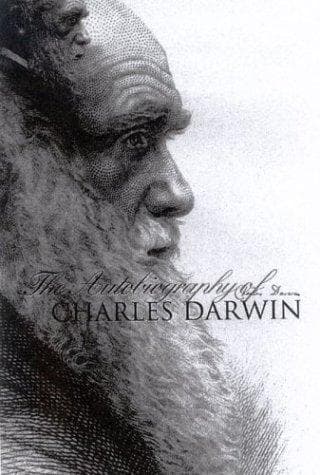
The Autobiography of Charles DarwinDarwin, Charles
Science
The Autobiography of Charles Darwin
Darwin, Charles
Darwin, Charles, 1809-1882; Darwin, Charles, 1809-1882. On the origin of species; Naturalists -- Great Britain -- Biography
—reminds me of Buckle whom I once met at Hensleigh Wedgwood’s. I was
very glad to learn from him his system of collecting facts. He told me
that he bought all the books which he read, and made a full index, to
each, of the facts which he thought might prove serviceable to him, and
that he could always remember in what book he had read anything, for
his memory was wonderful. I asked him how at first he could judge what
facts would be serviceable, and he answered that he did not know, but
that a sort of instinct guided him. From this habit of making indices,
he was enabled to give the astonishing number of references on all
sorts of subjects, which may be found in his ‘History of Civilisation.’
This book I thought most interesting, and read it twice, but I doubt
whether his generalisations are worth anything. Buckle was a great
talker, and I listened to him saying hardly a word, nor indeed could I
have done so for he left no gaps. When Mrs. Farrer began to sing, I
jumped up and said that I must listen to her; after I had moved away he
turned around to a friend and said (as was overheard by my brother),
“Well, Mr. Darwin’s books are much better than his conversation.”
Of other great literary men, I once met Sydney Smith at Dean Milman’s
house. There was something inexplicably amusing in every word which he
uttered. Perhaps this was partly due to the expectation of being
amused. He was talking about Lady Cork, who was then extremely old.
This was the lady who, as he said, was once so much affected by one of
his charity sermons, that she _borrowed_ a guinea from a friend to put
in the plate. He now said “It is generally believed that my dear old
friend Lady Cork has been overlooked,” and he said this in such a
manner that no one could for a moment doubt that he meant that his dear
old friend had been overlooked by the devil. How he managed to express
this I know not.
I likewise once met Macaulay at Lord Stanhope’s (the historian’s)
house, and as there was only one other man at dinner, I had a grand
opportunity of hearing him converse, and he was very agreeable. He did
not talk at all too much; nor indeed could such a man talk too much, as
long as he allowed others to turn the stream of his conversation, and
this he did allow.
Lord Stanhope once gave me a curious little proof of the accuracy and
fulness of Macaulay’s memory: many historians used often to meet at
Lord Stanhope’s house, and in discussing various subjects they would
sometimes differ from Macaulay, and formerly they often referred to
some book to see who was right; but latterly, as Lord Stanhope noticed,
no historian ever took this trouble, and whatever Macaulay said was
final.
Public-domain text, read in full here on John Shaqi.
Reviews
Reviews
No reviews yet
Be the first to share your thoughts on this work.
Join the Discussion
Join the discussion
Sign in to leave a comment or review.
Sign InorCreate an account