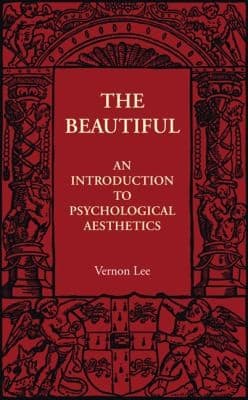
The Beautiful: An Introduction to Psychological AestheticsLee, Vernon
Philosophy
The Beautiful: An Introduction to Psychological Aesthetics
Lee, Vernon
Aesthetics; Form (Aesthetics); Psychology, Applied
Florentine fourteenth century) with a habit of round arch and
horizontals like that of Pisan architecture, could never take with
enthusiasm to the pointed ogeeval ellipse, the oblique directions and
unstable equilibrium, the drama of touch and go strain and resistance,
of French Gothic; whence a constant readmission of the round
arched shapes into the imported style, and a speedy return to the
familiar empathic schemes in the architecture of the early
Renaissance. On the other hand the persistence of Gothic detail in
Northern architecture of the sixteenth and occasionally the
seventeenth century, shows how insipid the round arch and straight
entablature must have felt to people accustomed to the empathy of
Gothic shapes. Nothing is so routinist as imagination and emotion;
and empathy, which partakes of both, is therefore more dependent
on familiarity than is the perception by which it is started: Spohr,
and the other professional contemporaries of Beethoven, probably
heard and technically understood all the peculiarities of his last
quartets; but they liked them none the better.
On the other hand continued repetition notoriously begets
indifference. We cease to look at a shape which we "know by heart"
and we cease to interpret in terms of our own activities and
intentions when curiosity and expectation no longer let loose our
dynamic imagination. Hence while utter unfamiliarity baffles
aesthetic responsiveness, excessive familiarity prevents its starting
at all. Indeed both perceptive clearness and empathic intensity reach
their climax in the case of shapes which afford the excitement of
tracking familiarity in novelty, the stimulation of acute comparison,
the emotional ups and downs of expectation and partial recognition,
or of recognition when unexpected, the latter having, as we know
when we notice that a stranger has the trick of speech or gesture of
an acquaintance, a very penetrating emotional warmth. Such
discovery of the novel in the familiar, and of the familiar in the new,
will he frequent in proportion to the definiteness and complexity of
the shapes, and in proportion also to the sensitiveness and steadiness
of the beholder's attention; while on the contrary "obvious" qualities
of shape and superficial attention both tend to exhaust interest and
demand change. This exhaustion of interest and consequent demand
for change unites with the changing non-aesthetic aims imposed on
art, together producing innovation. And the more superficial the
aesthetic attention given by the beholders, the quicker will style
succeed style, and shapes and shape-schemes be done to death by
exaggeration or left in the lurch before their maturity; a state of
affairs especially noticeable in our own day.
Public-domain text, read in full here on John Shaqi.
Reviews
Reviews
No reviews yet
Be the first to share your thoughts on this work.
Elsewhere in the archive
Join the Discussion
Join the discussion
Sign in to leave a comment or review.
Sign InorCreate an account