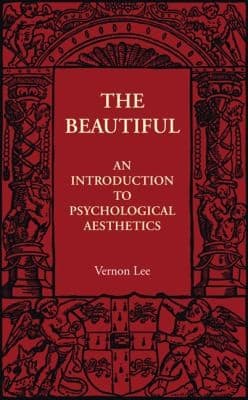
The Beautiful: An Introduction to Psychological AestheticsLee, Vernon
Philosophy
The Beautiful: An Introduction to Psychological Aesthetics
Lee, Vernon
Aesthetics; Form (Aesthetics); Psychology, Applied
The above is a series of illustrations of the fact that aesthetic
pleasure depends as much on the activities of the beholder as on
those of the artist. Unfamiliarity or over-familiarity explain a large
part of the aesthetic non-responsiveness summed up in the saying
_that there is no disputing of tastes._ And even within the circle of
habitual responsiveness to some particular style, or master, there are,
as we have just seen, days and hours when an individual beholder's
perception and empathic imagination do not act in such manner as to
afford the usual pleasure. But these occasional, even frequent, lapses
must not diminish our belief either in the power of art or in the
deeply organised and inevitable nature of aesthetic preference as a
whole. What the knowledge of such fluctuations ought to bring
home is that beauty of shape is most spontaneously and completely
appreciated when the attention, instead of being called upon, as in
galleries and concerts, for the mere purpose of aesthetic enjoyment,
is on the contrary, directed to the artistic or "natural" beauty of
shapes, in consequence of some other already existing interest. No
one except an art-critic sees a new picture or statue without first
asking "What does it represent?"; shape-perception and aesthetic
empathy arising incidentally in the examination which this question
leads to. The truth is that even the art-critic is oftenest brought into
enforced contemplation of the artistic shape by some other question
which arises from his particular bias: By whom? of what precise
date? Even such technical questions as "where and when restored or
repainted?" will elicit the necessary output of attention. It is possible
and legitimate to be interested in a work of art for a dozen reasons
besides aesthetic appreciation; each of these interests has its own
sentimental, scientific, dramatic or even moneymaking emotion; and
there is no loss for art, but rather a gain, if we fall back upon one of
them when the specific aesthetic response is slow or not
forthcoming. Art has other aims besides aesthetic satisfaction; and
aesthetic satisfaction will not come any the quicker for turning our
backs upon these non-aesthetic aims. The very worst attitude
towards art is that of the holiday-maker who comes into its presence
with no ulterior interest or business, and nothing but the hope of an
aesthetic emotion which is most often denied him. Indeed such
seeking of aesthetic pleasure for its own sake would lead to even
more of the blank despondency characteristic of so many gallery
goers, were it not for another peculiarity of aesthetic responsiveness,
which is responsible for very puzzling effects. This saving grace of
the tourist, and (as we shall see) this pitfall of the art-expert, is what
I propose to call the _Transferability of Aesthetic Emotion._
CHAPTER XIX
THE STORAGE AND TRANSFER OF EMOTION
Public-domain text, read in full here on John Shaqi.
Reviews
Reviews
No reviews yet
Be the first to share your thoughts on this work.
Elsewhere in the archive
Join the Discussion
Join the discussion
Sign in to leave a comment or review.
Sign InorCreate an account