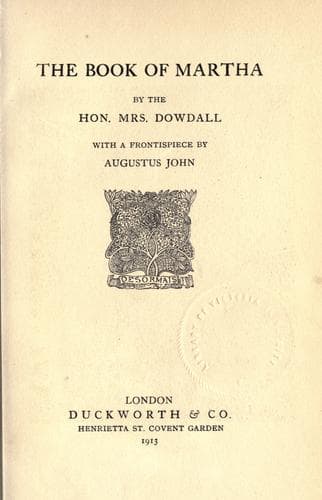
England -- Social life and customs -- Humor; English wit and humor; Housekeeping -- Humor; Marriage -- Humor
When I married, thirty years ago, I desired to lead a simpler life than
is led by most people. So many women seem to me like parasites living
on the combined labour of husband and servants. My friend Elizabeth
Tique, with whom I often stayed, kept a cook, three maids, and an odd
man, and these wretches somehow contrived to fill every inch of the
small house and garden. It was almost impossible to go into any room
without finding some one aggravatingly dressed in spotted cotton,
rustling along with either a damp cloth or a carpet-sweeper or a tray
laden with food. On one occasion, I remember, I went to my bedroom to
write letters, having left one of the cotton-backs clearing away the
breakfast, and the other, she of the damp cloth, in possession of the
drawing-room. By some marvellous sleight of foot they both contrived to
reach my room before me, and were busily engaged there when I arrived.
“Don’t go away,” I said pleasantly, and gathering up my blotting-pad
and papers I returned to the drawing-room to write. I was in the full
swing of inspiration when the door was burst open by a third skirmisher
in the hated uniform. She made her offence far worse by pretending that
her visit was only one of wanton light-heartedness.
“It’s all right, Miss,” she said, “I can come back by and by; it was
only to do the grate.”
I swallowed the word that rose to my lips--Elizabeth says it doesn’t
do for the servants to know we say these things--and took my papers
to the garden; but my letter was no longer witty. It was full of
short disjointed sentences and tedious information. In a few minutes
I was startled by a terrific rumbling on the gravel. The odd man was
approaching to mow the lawn.
“Sorry to disturb you, Miss; I shan’t be above ’alf an hour,” was the
way he put it. There are many possible variations of the same crime.
“Elizabeth,” I said as politely as I could when she came out on her way
to the shops, “have you a wine-cellar?”
“Yes, a beauty. Why?”
“Do you mind telling me--is this the day for cleaning it out?”
“What nonsense; we don’t clean it out.”
“Then may I sit in it?”
Elizabeth was busy with the fish, but she told me where the key was,
and I went down with a candle. It was cool and quiet and cobwebby, and
I got on nicely. I was just getting my second wind and had refilled
my fountain pen when I heard a voice--that of my enemy with the
cloth--outside the door.
“This is the cellar, Mr. Brown. I think master wished the port put in
the second bin from the left. I’ll just give it a wipe out if you’ll
excuse me.”
I tried the coach-house, but it happened to be George’s day for
swilling it after he had finished the grass, and when I found a place
in the greenhouse away from the drip he came and put manure on the
tomatoes.
Public-domain text, read in full here on John Shaqi.
Reviews
Reviews
No reviews yet
Be the first to share your thoughts on this work.
Join the Discussion
Join the discussion
Sign in to leave a comment or review.
Sign InorCreate an account