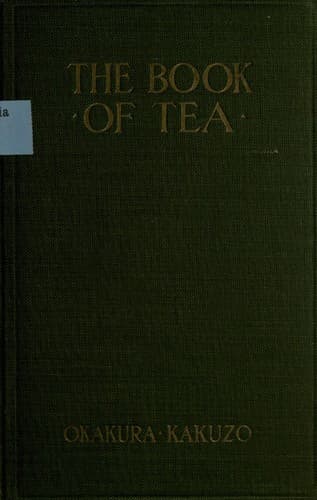
Japan -- Social life and customs; Japanese tea ceremony; Tea
The heaven of modern humanity is indeed shattered in the Cyclopean
struggle for wealth and power. The world is groping in the shadow of
egotism and vulgarity. Knowledge is bought through a bad conscience,
benevolence practiced for the sake of utility. The East and the West,
like two dragons tossed in a sea of ferment, in vain strive to
regain the jewel of life. We need a Niuka again to repair the grand
devastation; we await the great Avatar. Meanwhile, let us have a sip of
tea. The afternoon glow is brightening the bamboos, the fountains are
bubbling with delight, the soughing of the pines is heard in our kettle.
Let us dream of evanescence, and linger in the beautiful foolishness of
things.
II. The Schools of Tea.
Tea is a work of art and needs a master hand to bring out its
noblest qualities. We have good and bad tea, as we have good and bad
paintings--generally the latter. There is no single recipe for making
the perfect tea, as there are no rules for producing a Titian or a
Sesson. Each preparation of the leaves has its individuality, its
special affinity with water and heat, its own method of telling a story.
The truly beautiful must always be in it. How much do we not suffer
through the constant failure of society to recognise this simple and
fundamental law of art and life; Lichilai, a Sung poet, has sadly
remarked that there were three most deplorable things in the world: the
spoiling of fine youths through false education, the degradation of fine
art through vulgar admiration, and the utter waste of fine tea through
incompetent manipulation.
Like Art, Tea has its periods and its schools. Its evolution may be
roughly divided into three main stages: the Boiled Tea, the Whipped Tea,
and the Steeped Tea. We moderns belong to the last school. These several
methods of appreciating the beverage are indicative of the spirit of the
age in which they prevailed. For life is an expression, our unconscious
actions the constant betrayal of our innermost thought. Confucius said
that "man hideth not." Perhaps we reveal ourselves too much in small
things because we have so little of the great to conceal. The tiny
incidents of daily routine are as much a commentary of racial ideals as
the highest flight of philosophy or poetry. Even as the difference in
favorite vintage marks the separate idiosyncrasies of different periods
and nationalities of Europe, so the Tea-ideals characterise the
various moods of Oriental culture. The Cake-tea which was boiled, the
Powdered-tea which was whipped, the Leaf-tea which was steeped, mark
the distinct emotional impulses of the Tang, the Sung, and the Ming
dynasties of China. If we were inclined to borrow the much-abused
terminology of art-classification, we might designate them respectively,
the Classic, the Romantic, and the Naturalistic schools of Tea.
Public-domain text, read in full here on John Shaqi.
Reviews
Reviews
No reviews yet
Be the first to share your thoughts on this work.
Join the Discussion
Join the discussion
Sign in to leave a comment or review.
Sign InorCreate an account