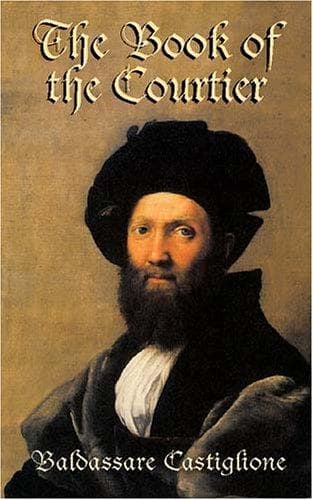
The Book of the CourtierCastiglione, Baldassarre, conte
History
The Book of the Courtier
Castiglione, Baldassarre, conte
Courtesy -- Early works to 1800; Courts and courtiers -- Early works to 1800
“As to women’s imperfection, methinks you have adduced a very weak
argument; to which, although perhaps it be not timely to enter upon
these subtleties now, I reply (according to the opinion of one who knows
and according to truth) that the substance of anything you please cannot
receive into itself more or less. For just as no one stone can be more
perfectly stone than another as regards the essence of a stone, nor one
piece of wood more perfectly wood than another,—so one man cannot be
more perfectly man than another; and consequently the male will not be
more perfect than the female as regards its essential substance, because
both are included in the species man, and that wherein the one differs
from the other is an accidental matter and not essential. In case you
then tell me that man is more perfect than woman, if not in essence, at
least in non-essentials, I reply that these non-essentials must pertain
either to the body or to the mind; if to the body (as in that man is
more robust, more agile, lighter, or more capable of toil), I say that
this is proof of very slight perfection, because even among men, they
who have these qualities more than others have, are not more esteemed
therefor; and even in wars, where the greater part of the work is
laborious and a matter of strength, the strongest are yet not the most
prized; if to the mind, I say that all the things that men can
understand, the same can women understand too; and where the intellect
of the one penetrates, there also can that of the other penetrate.”
13.—Having here made a little pause, the Magnifico Giuliano added,
laughing:
“Do you not know that in philosophy this proposition is maintained, that
those who are tender in flesh are apt in mind? So there is no doubt that
women, being tenderer in flesh, are apter in mind, and of capacity
better fitted for speculation than men are.” Then he continued:
“But leaving this aside, since you have told me to argue concerning the
perfection of both from their acts, I say that if you will consider the
workings of nature, you will find that she makes women what they are,
not by chance, but adapted to the necessary end: for although she makes
them not strong in body and of placid spirit, with many other qualities
opposed to those of men, yet the characters of both tend to one single
end conducive to the same use. For just as by reason of that feebleness
of theirs women are less courageous, so for the same reason they are
also more cautious: thus the mother nourishes her children, the father
instructs them and with his strength earns abroad that which she with
anxious care preserves at home, which is not the lesser merit.
Public-domain text, read in full here on John Shaqi.
Reviews
Reviews
No reviews yet
Be the first to share your thoughts on this work.
Elsewhere in the archive
Join the Discussion
Join the discussion
Sign in to leave a comment or review.
Sign InorCreate an account