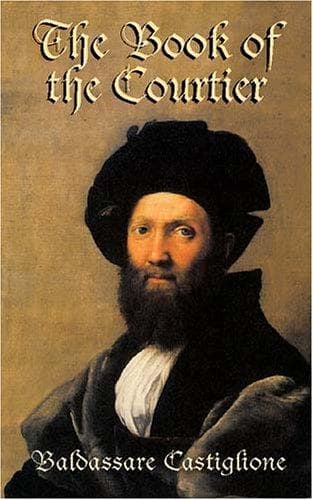
The Book of the CourtierCastiglione, Baldassarre, conte
History
The Book of the Courtier
Castiglione, Baldassarre, conte
Courtesy -- Early works to 1800; Courts and courtiers -- Early works to 1800
“Again, if you examine the ancient histories (albeit men have ever been
very chary of writing women’s praises) and the modern ones, you will
find that worth has continually existed among women as well as among
men; and that there have even been those who waged wars and won glorious
victories therein, governed kingdoms with the highest prudence and
justice, and did everything that men have done. As for the sciences, do
you not remember having read of many women who were learned in
philosophy? Others who were very excellent in poetry? Others who
conducted suits, and accused and defended most eloquently before judges?
Of handicrafts it would be too long to tell, nor is there need to bring
proof regarding that.
“Therefore, if in essential substance man is not more perfect than
woman, nor in non-essentials either (and of this, quite apart from
argument, the effects are seen), I do not know in what consists this
perfection of his.
14.—“And since you said that nature’s aim is always to bring forth the
most perfect things, and that she therefore would always bring forth man
if she could, and that the bringing forth of woman is rather an errour
or defect in nature than of purpose,—I reply that this is totally
denied; nor do I see how you can say that nature does not aim to bring
forth women, without whom the human species cannot be preserved, whereof
this same nature is more desirous than of everything else. For by means
of this union of male and female she brings forth children, who repay
the benefits received in childhood by maintaining their parents when
old; then in turn they beget other children of their own, from whom they
look to receive in old age that which they in their youth bestowed upon
their parents; thus nature, moving as it were in a circle, fills out
eternity and in this way grants immortality to mortals. Woman being
therefore as necessary in this as man, I do not see how the one was made
more by chance than the other.
“It is very true that nature aims always to bring forth the most perfect
things, and hence means to bring forth man after his kind, but not male
rather than female. Nay, if she were always to bring forth male, she
would be working imperfection; for just as from body and soul there
results a compound more noble than its parts, which is man,—so from the
union of male and female there results a compound which preserves the
human species, and without which its members would perish. And hence
male and female are by nature always together, nor can the one exist
without the other; thus that ought not to be called male which has no
female, according to the definition of each; nor female, that which has
no male. And as one sex alone shows imperfection, the theologians of old
attribute both the one and the other to God:[341] wherefore Orpheus said
that Jove was male and female; and we read in Holy Writ that God formed
men male and female in his own likeness; and often the poets, speaking
of the gods, confuse the sex.”
Public-domain text, read in full here on John Shaqi.
Reviews
Reviews
No reviews yet
Be the first to share your thoughts on this work.
Elsewhere in the archive
Join the Discussion
Join the discussion
Sign in to leave a comment or review.
Sign InorCreate an account