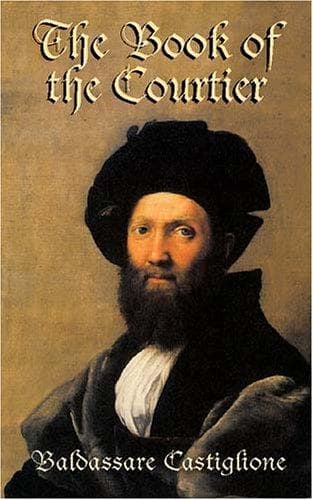
The Book of the CourtierCastiglione, Baldassarre, conte
History
The Book of the Courtier
Castiglione, Baldassarre, conte
Courtesy -- Early works to 1800; Courts and courtiers -- Early works to 1800
The present edition consists of five hundred numbered copies, of
which this is No.
TRANSLATOR’S PREFACE
The popularity long enjoyed by this old book, the place that it holds in
Italian literature, and the fact that it is almost inaccessible to
English readers, seem to furnish sufficient reason for a new
translation.
The art of the Italian Renaissance delights us by its delicate and
gentle beauty, and yet we know that life during this period was often
gross and violent. To understand this, we must remember that art is more
the expression of the ideal than of the actual, and that men’s ideals
are loftier than their practice. Castiglione gives utterance to the
finest aspirations of his time. His pages will lack interest only when
mankind ceases to be interesting to man, and will reward study so long
as the past shall continue to instruct the present and the future.
The few deviations that the present translator has ventured to make from
the letter of the Italian text are merely verbal, and were deemed
needful to render its meaning clear. The notes that he offers are
intended to explain obscure passages and to relieve the reader from the
tedium of searching in books of reference. Perhaps no one will regard it
as inopportune to be reminded of what all may have known but few are
able to remember with precision. Students who may wish to learn from
what Greek and Latin sources Castiglione derived material are referred
to Professor Vittorio Cian’s admirable edition.
The translator desires to express his thanks for the friendly
encouragement that he has received from Miss Grace Norton, at whose
suggestion his task was undertaken. He is indebted to Dr. Luigi Roversi
and Signor Leopoldo Jung for their patient aid, and to Signor Alessandro
Luzio and many other scholars, in Italy and elsewhere, for the kindness
with which they have helped him to gather portraits and bibliographical
data. He gratefully acknowledges, also, his frequent use of Professor
Cian’s erudite labours, of John Addington Symonds’s RENAISSANCE IN
ITALY, and of James Dennistoun’s MEMOIRS OF THE DUKES OF URBINO.
CONTENTS
(The Arabic numerals given below refer to the numbered paragraphs
into which it has long been customary to divide the work)
Public-domain text, read in full here on John Shaqi.
Reviews
Reviews
No reviews yet
Be the first to share your thoughts on this work.
Join the Discussion
Join the discussion
Sign in to leave a comment or review.
Sign InorCreate an account