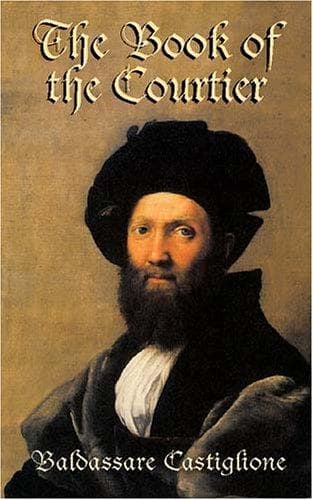
The Book of the CourtierCastiglione, Baldassarre, conte
History
The Book of the Courtier
Castiglione, Baldassarre, conte
Courtesy -- Early works to 1800; Courts and courtiers -- Early works to 1800
“Nay, the practice of arms pertains to both mind and body. But I would
not have you judge in such a cause, messer Pietro, for you would be too
much suspected of bias by one of the two sides: and as the controversy
has already been long waged by very wise men, there is no need to renew
it; but I regard it as settled in favour of arms, and would have our
Courtier so regard it too, since I may form him as I wish. And if you
are of contrary mind, wait till you hear of a contest wherein he who
defends the cause of arms is allowed to use arms, just as those who
defend letters make use of letters in their defence; for if everyone
avails himself of his proper weapons, you shall see that men of letters
will be worsted.”
“Ah,” said messer Pietro, “a while ago you blamed the French for prizing
letters little, and told what glorious lustre is shed on man by letters
and how they make him immortal; and now it seems you have changed your
mind. Do you not remember that
Before the famous tomb of brave Achilles
Thus spake the mighty Alexander, sighing:
‘O happy youth, who found so clear a trumpet,
And lofty bard to make thy deeds undying!’[120]
And if Alexander envied Achilles not for his deeds, but for the fortune
that had granted him the happiness of having his exploits celebrated by
Homer, we may conclude that Alexander esteemed Homer’s poems above
Achilles’s arms. For what other judge do you wait then, or for what
other sentence upon the dignity of arms and letters, than that
pronounced by one of the greatest commanders that have ever been?”
46.—Then the Count replied:
“I blame the French for thinking that letters are a hindrance to the
profession of arms, and I hold that learning is more proper to no one
than to a warrior; and in our Courtier I would have these two
accomplishments joined and each aided by the other, as is most proper:
nor do I think I have changed my mind in this. But as I said, I do not
wish to discuss which of the two is more worthy of praise. It is enough
that men of letters almost never select for praise any but great men and
glorious deeds, which in themselves merit praise for the mere essential
quality from which they spring; besides this they are very noble
material for writers: which is a great ornament, and in part the cause
of perpetuating writings, which perhaps would not be so much read and
appreciated if they lacked their noble theme, but vain and of little
moment.
Public-domain text, read in full here on John Shaqi.
Reviews
Reviews
No reviews yet
Be the first to share your thoughts on this work.
Elsewhere in the archive
Join the Discussion
Join the discussion
Sign in to leave a comment or review.
Sign InorCreate an account