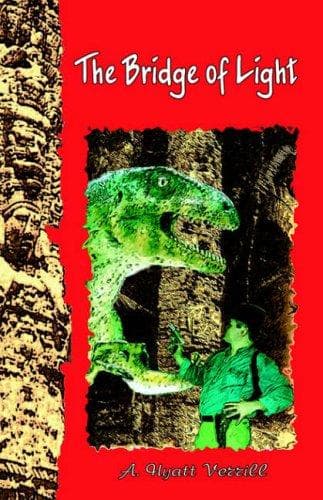
The bridge of lightVerrill, A. Hyatt (Alpheus Hyatt)
Science
The bridge of light
Verrill, A. Hyatt (Alpheus Hyatt)
Adventure stories; Central America -- Fiction; Mayas -- Fiction; Science fiction
Truly my visit to that little shop in Vigo was leading me far afield.
At Totil I left civilization behind. Beyond was wilderness; unknown,
almost uninhabited country; vast forests, great mountains, wide plains;
land seldom or never trod by white men, where even the old conquerors
had not penetrated. For hundreds of miles there were no signs of human
beings; along our route were only the occasional huts of half-savage
Indians, or clusters of thatched homes of the tribesmen once--centuries
before--under Mayan dominion, though now showing no traces of the
culture of that wonderful race. But if no traces remained in the
people, there were abundant evidences in the mute remains the Mayas
had left behind. Time and again we came upon huge columns or stellae
of sculptured stone in the forest, wonderful monoliths that under
any other conditions I would have examined and studied with the most
intense interest. Twice, too, we passed enormous ruined temples, great
trees growing from their summits, tangled vines and tropical shrubs
sprouting from the crevices between the stones, their wonderfully
carved façades defaced by time and the elements; their interiors choked
with débris, but still imposing in their majestic proportions; their
beauty of design and the intricacy of their sculptured stone work.
Once, too, we gazed from a hilltop upon the ruins of an immense city,
upon a plain beside a river. But all was silent, deserted, forgotten.
* * * * *
FOR eleven days we traveled, sometimes following trails visible only
to the eyes of my Indian guides, at other times hewing a way through
the jungles, again following the rivers, ascending mountains, marching
through great open forests. The way seemed endless; I began to fear
my Indians had lost their way, when, issuing from the forest, we came
to a cleared plain. Tilled fields of maize, cane, sweet potatoes and
others plants covered many acres, and in the centre of the cultivated
lands was a village of thatch-roofed houses gleaming like gold in
the sun. That the modern village occupied the site of an ancient
city was evident. Ruins of stone walls and buildings rose above the
waving corn and banana trees. Towering above the village was a great
pyramidal Kus[1] topped by a temple bearing an ornate roof-comb, and
as we entered the village, we passed between two rows of sculptured
stone columns. I gazed at them in amazement. They were gay with red,
green and white paint; at their bases were flowers and fruits. There
was no doubt of it. Here in this remote village, the old faiths still
lived, the old gods were still worshipped. Very likely, the people
still worshipped in the ancient temple. There, no doubt, the priest,
Katchilcan, still officiated, though Fray José had not mentioned it.
[1] KUS--A mound, usually pyramidal--supporting a temple, a shrine or
an altar used for religious or ceremonial purposes.
Public-domain text, read in full here on John Shaqi.
Reviews
Reviews
No reviews yet
Be the first to share your thoughts on this work.
Join the Discussion
Join the discussion
Sign in to leave a comment or review.
Sign InorCreate an account