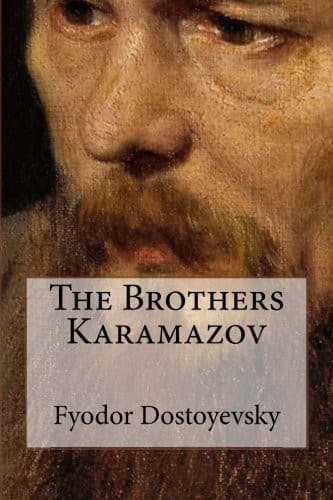
Brothers -- Fiction; Didactic fiction; Fathers and sons -- Fiction; Russia -- Social life and customs -- 1533-1917 -- Fiction
It happened that the old lady died soon after this, but she left the
boys in her will a thousand roubles each “for their instruction, and so
that all be spent on them exclusively, with the condition that it be so
portioned out as to last till they are twenty-one, for it is more than
adequate provision for such children. If other people think fit to
throw away their money, let them.” I have not read the will myself, but
I heard there was something queer of the sort, very whimsically
expressed. The principal heir, Yefim Petrovitch Polenov, the Marshal of
Nobility of the province, turned out, however, to be an honest man.
Writing to Fyodor Pavlovitch, and discerning at once that he could
extract nothing from him for his children’s education (though the
latter never directly refused but only procrastinated as he always did
in such cases, and was, indeed, at times effusively sentimental), Yefim
Petrovitch took a personal interest in the orphans. He became
especially fond of the younger, Alexey, who lived for a long while as
one of his family. I beg the reader to note this from the beginning.
And to Yefim Petrovitch, a man of a generosity and humanity rarely to
be met with, the young people were more indebted for their education
and bringing up than to any one. He kept the two thousand roubles left
to them by the general’s widow intact, so that by the time they came of
age their portions had been doubled by the accumulation of interest. He
educated them both at his own expense, and certainly spent far more
than a thousand roubles upon each of them. I won’t enter into a
detailed account of their boyhood and youth, but will only mention a
few of the most important events. Of the elder, Ivan, I will only say
that he grew into a somewhat morose and reserved, though far from timid
boy. At ten years old he had realized that they were living not in
their own home but on other people’s charity, and that their father was
a man of whom it was disgraceful to speak. This boy began very early,
almost in his infancy (so they say at least), to show a brilliant and
unusual aptitude for learning. I don’t know precisely why, but he left
the family of Yefim Petrovitch when he was hardly thirteen, entering a
Moscow gymnasium, and boarding with an experienced and celebrated
teacher, an old friend of Yefim Petrovitch. Ivan used to declare
afterwards that this was all due to the “ardor for good works” of Yefim
Petrovitch, who was captivated by the idea that the boy’s genius should
be trained by a teacher of genius. But neither Yefim Petrovitch nor
this teacher was living when the young man finished at the gymnasium
and entered the university. As Yefim Petrovitch had made no provision
for the payment of the tyrannical old lady’s legacy, which had grown
from one thousand to two, it was delayed, owing to formalities
inevitable in Russia, and the young man was in great straits for the
first two years at the university, as he was forced to keep himself all
Public-domain text, read in full here on John Shaqi.
Reviews
Reviews
No reviews yet
Be the first to share your thoughts on this work.
Join the Discussion
Join the discussion
Sign in to leave a comment or review.
Sign InorCreate an account