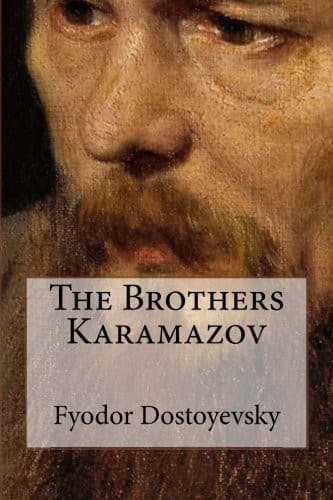
Brothers -- Fiction; Didactic fiction; Fathers and sons -- Fiction; Russia -- Social life and customs -- 1533-1917 -- Fiction
the time he was studying. It must be noted that he did not even attempt
to communicate with his father, perhaps from pride, from contempt for
him, or perhaps from his cool common sense, which told him that from
such a father he would get no real assistance. However that may have
been, the young man was by no means despondent and succeeded in getting
work, at first giving sixpenny lessons and afterwards getting
paragraphs on street incidents into the newspapers under the signature
of “Eye-Witness.” These paragraphs, it was said, were so interesting
and piquant that they were soon taken. This alone showed the young
man’s practical and intellectual superiority over the masses of needy
and unfortunate students of both sexes who hang about the offices of
the newspapers and journals, unable to think of anything better than
everlasting entreaties for copying and translations from the French.
Having once got into touch with the editors Ivan Fyodorovitch always
kept up his connection with them, and in his latter years at the
university he published brilliant reviews of books upon various special
subjects, so that he became well known in literary circles. But only in
his last year he suddenly succeeded in attracting the attention of a
far wider circle of readers, so that a great many people noticed and
remembered him. It was rather a curious incident. When he had just left
the university and was preparing to go abroad upon his two thousand
roubles, Ivan Fyodorovitch published in one of the more important
journals a strange article, which attracted general notice, on a
subject of which he might have been supposed to know nothing, as he was
a student of natural science. The article dealt with a subject which
was being debated everywhere at the time—the position of the
ecclesiastical courts. After discussing several opinions on the subject
he went on to explain his own view. What was most striking about the
article was its tone, and its unexpected conclusion. Many of the Church
party regarded him unquestioningly as on their side. And yet not only
the secularists but even atheists joined them in their applause.
Finally some sagacious persons opined that the article was nothing but
an impudent satirical burlesque. I mention this incident particularly
because this article penetrated into the famous monastery in our
neighborhood, where the inmates, being particularly interested in the
question of the ecclesiastical courts, were completely bewildered by
it. Learning the author’s name, they were interested in his being a
native of the town and the son of “that Fyodor Pavlovitch.” And just
then it was that the author himself made his appearance among us.
Public-domain text, read in full here on John Shaqi.
Reviews
Reviews
No reviews yet
Be the first to share your thoughts on this work.
Join the Discussion
Join the discussion
Sign in to leave a comment or review.
Sign InorCreate an account