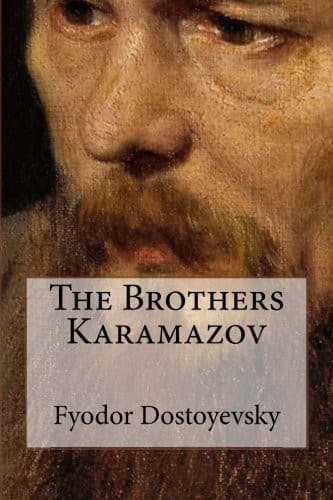
Brothers -- Fiction; Didactic fiction; Fathers and sons -- Fiction; Russia -- Social life and customs -- 1533-1917 -- Fiction
Some of my readers may imagine that my young man was a sickly,
ecstatic, poorly developed creature, a pale, consumptive dreamer. On
the contrary, Alyosha was at this time a well-grown, red-cheeked,
clear-eyed lad of nineteen, radiant with health. He was very handsome,
too, graceful, moderately tall, with hair of a dark brown, with a
regular, rather long, oval-shaped face, and wide-set dark gray, shining
eyes; he was very thoughtful, and apparently very serene. I shall be
told, perhaps, that red cheeks are not incompatible with fanaticism and
mysticism; but I fancy that Alyosha was more of a realist than any one.
Oh! no doubt, in the monastery he fully believed in miracles, but, to
my thinking, miracles are never a stumbling-block to the realist. It is
not miracles that dispose realists to belief. The genuine realist, if
he is an unbeliever, will always find strength and ability to
disbelieve in the miraculous, and if he is confronted with a miracle as
an irrefutable fact he would rather disbelieve his own senses than
admit the fact. Even if he admits it, he admits it as a fact of nature
till then unrecognized by him. Faith does not, in the realist, spring
from the miracle but the miracle from faith. If the realist once
believes, then he is bound by his very realism to admit the miraculous
also. The Apostle Thomas said that he would not believe till he saw,
but when he did see he said, “My Lord and my God!” Was it the miracle
forced him to believe? Most likely not, but he believed solely because
he desired to believe and possibly he fully believed in his secret
heart even when he said, “I do not believe till I see.”
Public-domain text, read in full here on John Shaqi.
Reviews
Reviews
No reviews yet
Be the first to share your thoughts on this work.
Join the Discussion
Join the discussion
Sign in to leave a comment or review.
Sign InorCreate an account