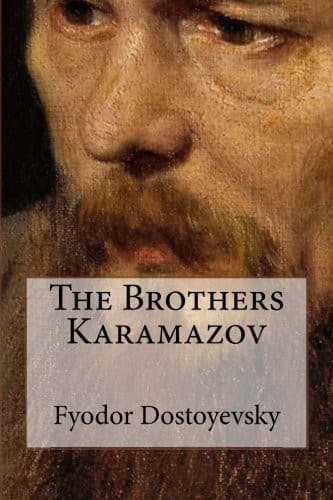
Brothers -- Fiction; Didactic fiction; Fathers and sons -- Fiction; Russia -- Social life and customs -- 1533-1917 -- Fiction
I shall be told, perhaps, that Alyosha was stupid, undeveloped, had not
finished his studies, and so on. That he did not finish his studies is
true, but to say that he was stupid or dull would be a great injustice.
I’ll simply repeat what I have said above. He entered upon this path
only because, at that time, it alone struck his imagination and
presented itself to him as offering an ideal means of escape for his
soul from darkness to light. Add to that that he was to some extent a
youth of our last epoch—that is, honest in nature, desiring the truth,
seeking for it and believing in it, and seeking to serve it at once
with all the strength of his soul, seeking for immediate action, and
ready to sacrifice everything, life itself, for it. Though these young
men unhappily fail to understand that the sacrifice of life is, in many
cases, the easiest of all sacrifices, and that to sacrifice, for
instance, five or six years of their seething youth to hard and tedious
study, if only to multiply tenfold their powers of serving the truth
and the cause they have set before them as their goal—such a sacrifice
is utterly beyond the strength of many of them. The path Alyosha chose
was a path going in the opposite direction, but he chose it with the
same thirst for swift achievement. As soon as he reflected seriously he
was convinced of the existence of God and immortality, and at once he
instinctively said to himself: “I want to live for immortality, and I
will accept no compromise.” In the same way, if he had decided that God
and immortality did not exist, he would at once have become an atheist
and a socialist. For socialism is not merely the labor question, it is
before all things the atheistic question, the question of the form
taken by atheism to-day, the question of the tower of Babel built
without God, not to mount to heaven from earth but to set up heaven on
earth. Alyosha would have found it strange and impossible to go on
living as before. It is written: “Give all that thou hast to the poor
and follow Me, if thou wouldst be perfect.”
Public-domain text, read in full here on John Shaqi.
Reviews
Reviews
No reviews yet
Be the first to share your thoughts on this work.
Join the Discussion
Join the discussion
Sign in to leave a comment or review.
Sign InorCreate an account