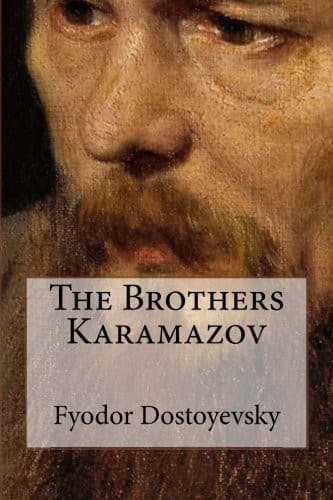
Brothers -- Fiction; Didactic fiction; Fathers and sons -- Fiction; Russia -- Social life and customs -- 1533-1917 -- Fiction
“Among us there is sin, injustice, and temptation, but yet, somewhere
on earth there is some one holy and exalted. He has the truth; he knows
the truth; so it is not dead upon the earth; so it will come one day to
us, too, and rule over all the earth according to the promise.”
Alyosha knew that this was just how the people felt and even reasoned.
He understood it, but that the elder Zossima was this saint and
custodian of God’s truth—of that he had no more doubt than the weeping
peasants and the sick women who held out their children to the elder.
The conviction that after his death the elder would bring extraordinary
glory to the monastery was even stronger in Alyosha than in any one
there, and, of late, a kind of deep flame of inner ecstasy burnt more
and more strongly in his heart. He was not at all troubled at this
elder’s standing as a solitary example before him.
“No matter. He is holy. He carries in his heart the secret of renewal
for all: that power which will, at last, establish truth on the earth,
and all men will be holy and love one another, and there will be no
more rich nor poor, no exalted nor humbled, but all will be as the
children of God, and the true Kingdom of Christ will come.” That was
the dream in Alyosha’s heart.
The arrival of his two brothers, whom he had not known till then,
seemed to make a great impression on Alyosha. He more quickly made
friends with his half-brother Dmitri (though he arrived later) than
with his own brother Ivan. He was extremely interested in his brother
Ivan, but when the latter had been two months in the town, though they
had met fairly often, they were still not intimate. Alyosha was
naturally silent, and he seemed to be expecting something, ashamed
about something, while his brother Ivan, though Alyosha noticed at
first that he looked long and curiously at him, seemed soon to have
left off thinking of him. Alyosha noticed it with some embarrassment.
He ascribed his brother’s indifference at first to the disparity of
their age and education. But he also wondered whether the absence of
curiosity and sympathy in Ivan might be due to some other cause
entirely unknown to him. He kept fancying that Ivan was absorbed in
something—something inward and important—that he was striving towards
some goal, perhaps very hard to attain, and that that was why he had no
thought for him. Alyosha wondered, too, whether there was not some
contempt on the part of the learned atheist for him—a foolish novice.
He knew for certain that his brother was an atheist. He could not take
offense at this contempt, if it existed; yet, with an uneasy
embarrassment which he did not himself understand, he waited for his
brother to come nearer to him. Dmitri used to speak of Ivan with the
deepest respect and with a peculiar earnestness. From him Alyosha
learnt all the details of the important affair which had of late formed
such a close and remarkable bond between the two elder brothers.
Public-domain text, read in full here on John Shaqi.
Reviews
Reviews
No reviews yet
Be the first to share your thoughts on this work.
Join the Discussion
Join the discussion
Sign in to leave a comment or review.
Sign InorCreate an account