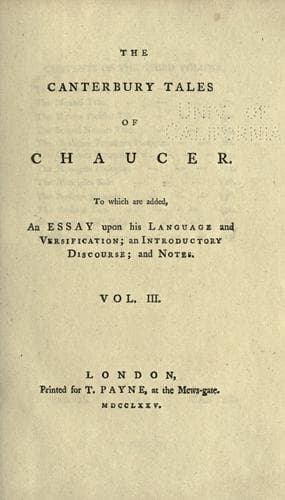
The Canterbury Tales, and Other PoemsChaucer, Geoffrey
ReligionChristian
The Canterbury Tales, and Other Poems
Chaucer, Geoffrey
Chaucer, Geoffrey, -1400; Christian pilgrims and pilgrimages -- Poetry; English poetry -- Middle English, 1100-1500
When they were come unto the court, this knight
Said, he had held his day, as he had hight,* *promised
And ready was his answer, as he said.
Full many a noble wife, and many a maid,
And many a widow, for that they be wise, —
The queen herself sitting as a justice, —
Assembled be, his answer for to hear,
And afterward this knight was bid appear.
To every wight commanded was silence,
And that the knight should tell in audience,
What thing that worldly women love the best.
This knight he stood not still, as doth a beast,
But to this question anon answer’d
With manly voice, that all the court it heard,
“My liege lady, generally,” quoth he,
“Women desire to have the sovereignty
As well over their husband as their love
And for to be in mast’ry him above.
This is your most desire, though ye me kill,
Do as you list, I am here at your will.”
In all the court there was no wife nor maid
Nor widow, that contraried what he said,
But said, he worthy was to have his life.
And with that word up start that olde wife
Which that the knight saw sitting on the green.
“Mercy,” quoth she, “my sovereign lady queen,
Ere that your court departe, do me right.
I taughte this answer unto this knight,
For which he plighted me his trothe there,
The firste thing I would of him requere,
He would it do, if it lay in his might.
Before this court then pray I thee, Sir Knight,”
Quoth she, “that thou me take unto thy wife,
For well thou know’st that I have kept* thy life. *preserved
If I say false, say nay, upon thy fay.”* *faith
This knight answer’d, “Alas, and well-away!
I know right well that such was my behest.* *promise
For Godde’s love choose a new request
Take all my good, and let my body go.”
“Nay, then,” quoth she, “I shrew* us bothe two, *curse
For though that I be old, and foul, and poor,
I n’ould* for all the metal nor the ore, *would not
That under earth is grave,* or lies above *buried
But if thy wife I were and eke thy love.”
“My love?” quoth he, “nay, my damnation,
Alas! that any of my nation
Should ever so foul disparaged be.
But all for nought; the end is this, that he
Constrained was, that needs he muste wed,
And take this olde wife, and go to bed.
Public-domain text, read in full here on John Shaqi.
Reviews
Reviews
No reviews yet
Be the first to share your thoughts on this work.
Elsewhere in the archive
Join the Discussion
Join the discussion
Sign in to leave a comment or review.
Sign InorCreate an account