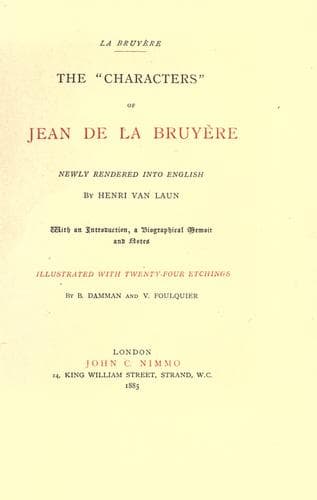
The "Characters" of Jean de La BruyèreLa Bruyère, Jean de
General
The "Characters" of Jean de La Bruyère
La Bruyère, Jean de
Character sketches -- Early works to 1800; Characters and characteristics
(12.) We blame a fashion that divides the shape of a man into two
equal parts, and takes one of it for the waist, whilst leaving the
other for the rest of the body; we condemn the fashion of making of a
ladyʼs head the basis of an edifice of several heights, the build and
shape of which change according to fancy; which removes the hair from
the face, though Nature designed it to adorn it; and ties it up and
makes it bristle so that the ladies look like Bacchantes; this fashion
seems to have been intended to make the fair sex change its mild and
modest air for one much more haughty and bold. People exclaim against
certain fashions as ridiculous; but they adopt them as long as they
last, to adorn and embellish themselves, and they derive from them
all the advantages they can expect, namely, to please. Methinks the
inconstancy and fickle-mindedness of men is to be admired; for they
successively call agreeable and ornamental things directly opposed to
one another; they use in plays and masquerades those same dresses and
ornaments which, until then, were considered as denoting gravity and
sedateness; a short time makes all the difference.[712]
(13.) N ... is wealthy; she eats and sleeps well; but the fashion of
head-dresses alters, and whilst she does not think anything at all
about it, and believes herself quite happy, her head-dress has quite
grown out of fashion.
(14.) Iphis attends church, and sees there a new-fashioned shoe;
he looks upon his own with a blush, and no longer believes he is well
dressed. He only comes to hear mass to show himself, but now he refuses
to go out, and keeps his room all day on account of his foot. He has a
soft hand, which he preserves so by scented paste, laughs often to show
his teeth, purses up his mouth, and is perpetually smiling; he looks
at his legs and surveys himself in the glass, and no man can have a
better opinion of his personal appearance than he has; he has adopted a
clear and delicate voice, but fortunately lisps;[713] he moves his head
about and has a sort of sweetness in his eyes which he does not forget
to use to set himself off; his gait is indolent, and his attitudes are
as pretty as he can contrive them; he sometimes rouges his face, but
not very often, and does not do so habitually. In truth, he always
wears breeches and a hat, but neither earrings nor a pearl necklace;
therefore I have not given him a place in my chapter “Of Women.”
Public-domain text, read in full here on John Shaqi.
Reviews
Reviews
No reviews yet
Be the first to share your thoughts on this work.
Elsewhere in the archive
Join the Discussion
Join the discussion
Sign in to leave a comment or review.
Sign InorCreate an account