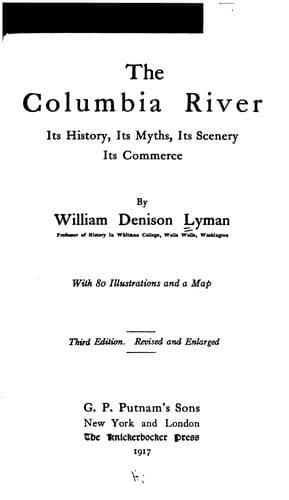
The Columbia River: Its History, Its Myths, Its Scenery, Its CommerceLyman, William Denison
History
The Columbia River: Its History, Its Myths, Its Scenery, Its Commerce
Lyman, William Denison
Columbia River; Columbia River -- Description and travel; Columbia River -- History
Perhaps the most gratifying feature of the shipping trade to Portland
people has been the increase in the size of ships entering the River. In
1872 the average wheat cargo exported was 33,615 bushels, while now it is
four times as much. The record cargo was that of the British bark
_Andorinha_, in the fall of 1908, 189,282 bushels. The channel from
Portland to the Columbia Bar and that across the Bar have so much improved
that no lightering was necessary during the year 1908, and ships of
twenty-five and twenty-six feet draft have gone from Portland to the ocean
without difficulty. In connection with this fact we are told that in June,
1907, the International Sailing-ship Owners' Union abolished the
differential of thirty cents per ton which had stood for some years
against Portland. These conditions, together with the completion of the
North Bank Railroad, by which a greatly added traffic from the Inland
Empire will be turned to Portland, seem to indicate that Portland is on
the direct road to a greater commercial leadership than she has yet known.
The lumber industry centring in Portland is as remarkable as that of
grain. Oregon's available forests, according to Government estimates,
reach a total of three hundred billion feet, board measure. It is
estimated that during the years 1906-8 the lumber cut in Oregon reached
about two billion feet each year, of which about one fifth was sawed in
Portland. It is asserted, in fact, that Portland is the largest lumber
producing city in the world. Lumbermen believe that it is only a question
of a few years when Portland will cut a billion feet of lumber a year.
While grain and lumber are the great articles of export from Portland,
there are vast totals of fruit, hay, live-stock, dairy and poultry
products, fish, and manufactured articles of many kinds.
Public-domain text, read in full here on John Shaqi.
Reviews
Reviews
No reviews yet
Be the first to share your thoughts on this work.
Elsewhere in the archive
Join the Discussion
Join the discussion
Sign in to leave a comment or review.
Sign InorCreate an account