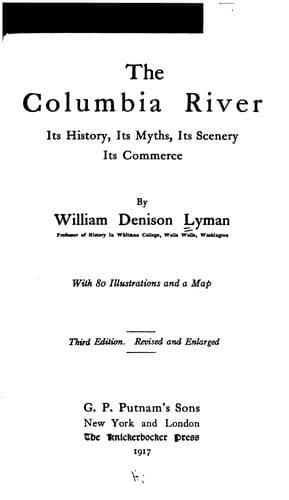
The Columbia River: Its History, Its Myths, Its Scenery, Its CommerceLyman, William Denison
History
The Columbia River: Its History, Its Myths, Its Scenery, Its Commerce
Lyman, William Denison
Columbia River; Columbia River -- Description and travel; Columbia River -- History
Tying the _Albatross_ to the bank on June 4th, they entered at once with
great energy on the task of felling trees, rearing a large log house,
clearing a garden spot, in which they at once began the planting of seeds,
and getting ready to trade with the natives. But within four days the
River began to rise rapidly, and the busy fort-builders perceived to their
dismay that they had located on land subject to inundation. All the work
thus far done went for naught, and they pulled their fort to pieces and
floated the logs down stream a quarter of a mile to a higher place. There
they resumed their buildings with redoubled energy. But within a week a
much more dangerous situation again, and this time permanently, arrested
their grand project. This time it was the very men toward whom they had
entertained such just and benevolent designs, the Indians, who thwarted
the plans. For, as Captain Gale narrates in a most entertaining manner, a
large body of Chinooks and Cheheeles, armed with bows and arrows, and some
muskets, made their appearance, announcing that they were on their way to
war against the Culaworth tribe who had killed one of their chiefs a year
before. But the next day the Indians massing themselves about the whites,
gave such plain indications that the previous declaration was a pretence
that the party hastily got into a position of defence. Their cannon on
board the _Albatross_ had already been loaded in anticipation of
emergencies, and so plain was it that they could make a deadly defence
that the threatened attack did not come. A long "pow-wow" ensued instead,
and the Chinooks insisted that the builders must select a site lower down
the river. After due consideration the party decided that any determined
opposition by the Indians would so impair their enterprise, even though
they might be able to defend themselves, that it would be best to seek a
new location. Accordingly they reloaded their effects, dropped down the
River, and finally decided to make a voyage down the California coast and
return the next year. Return they did, but by that time the next year the
Pacific Fur Company had already located at Astoria the first permanent
American settlement, and the Winship enterprise faded away. That the
design of the Winships was not at all chimerical is apparent from the fact
that within twenty years the Hudson's Bay Company had made of Vancouver,
sixty miles farther up the River, the very kind of a trading entrepot of
which the Winships had dreamed. Their dream was reasonable, but the time
and place were unpropitious.
A quotation from Captain Gale's journal will give a conception of his
feelings:
Public-domain text, read in full here on John Shaqi.
Reviews
Reviews
No reviews yet
Be the first to share your thoughts on this work.
Elsewhere in the archive
Join the Discussion
Join the discussion
Sign in to leave a comment or review.
Sign InorCreate an account