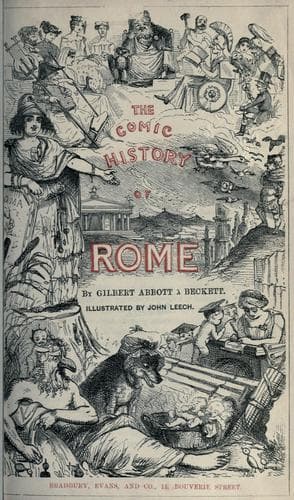
The Comic History of RomeÀ Beckett, Gilbert Abbott
History
The Comic History of Rome
À Beckett, Gilbert Abbott
Rome -- History -- Humor; Wit and humor, Pictorial
The Veientines continuing troublesome, Furius Camillus was appointed
dictator, when, with an engineering talent rare in those days, he
commenced a mine, and overcoming all minor, as well as major, or general
difficulties, he forced a way into the city. The King of Veii was
offering a sacrifice in the Temple of Juno, just as the Romans had
completed their tunnel, and as the soldiers burst like a crop of early
champions through the earth, he saw his fate written in bold Roman
characters. Everything was given to the conquerors, and it is said that
the statue of Juno, followed of its own accord; but the probability is,
the statue remained _in statu quo_, for miraculous instances of going
over to Rome were not in those days numerous.
Rome was once more at peace, when the citizens, with peculiar
ingratitude, having no other foes, began to quarrel with Camillus
himself, to whom they owed their tranquillity. They accused him of
having unduly trafficked in shares, by appropriating more than his due
portion of the booty. His unpopularity had not, however, come down upon
him until it was found that he had, in a fit of piety, dedicated a tenth
of the spoils of Veii to the Delphic God--a circumstance he had
forgotten to mention, until he had disposed of the whole of his own
share of the prize, and it became necessary for the other participators
in the plunder to redeem his promise at their own cost, and, with their
own ready money, to save his credit. His name fell at once from the
highest premium of praise to the lowest discount of disparagement, and
he incurred the especial detestation of those whom he had served; for
kindnesses are often written in marble in the hearts of those who
remember them only to repay them with ingratitude. Not liking to lie
under the imputation of dishonesty, and being unable to get over it, he
chose a middle course, and passed a sort of sentence of transportation
upon himself by going into voluntary exile. He, however, with a
littleness of mind that was not uncommon among the early Romans, vented
his spite as he left the city gate, expressing a wish that Rome might
rue his absence; but Rome consoled herself for the loss she might
sustain in him by confiscating the whole of his property.
Public-domain text, read in full here on John Shaqi.
Reviews
Reviews
No reviews yet
Be the first to share your thoughts on this work.
Elsewhere in the archive
Join the Discussion
Join the discussion
Sign in to leave a comment or review.
Sign InorCreate an account