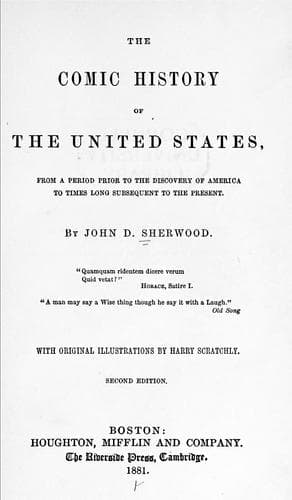
The comic history of the United States, from a period prior to the discovery of America to times long subsequent to the presentSherwood, John D.
History
The comic history of the United States, from a period prior to the discovery of America to times long subsequent to the present
Sherwood, John D.
United States -- History -- Humor
The keel of the Supreme Court was laid in 1789; and the vessel,
launched, well officered, and manned, provided with new spars, anchors,
and compass, was despatched from port to ride the turbulent seas of
maritime strife and constitutional conflict, and to override laws and
treaties which drift athwart the path of the Constitution. By and in it
States could originally be pursued; but after submitting for about fifty
years to the chase of individual plaintiffs, the States, headed by
Georgia, roused to a sovereign indignation and ruffled pride by being
compelled to answer for grievances inflicted by themselves on Indians,
negroes, white persons, and such trash, procured the passage of a
jealous amendment, relieving them from such embarrassments. Beautiful is
the theory that States can do no wrong to their own citizens.
Millennarian is the assumption that they are so ready to spring to their
loads of duty, that no judicial whip, with a snapper of judgment and
execution, is necessary to quicken their slackening consciences. As a
beautiful corollary from these delightful premises, is the most
comfortable practice of governments not to pay interest on claims
against themselves, however hoar with age; for the government assumes to
itself the virtue of being always ready, as the _fons et origo justitæ_,
to pay, and is presumably always pressing its offers to pay upon its
creditors.
At certain points we now touch the millennium.
At the next session of Congress, in 1790, Hamilton presented a report on
that subject which, like the poor, is always with us,—the public debt.
Of course every one thought that it was right to pay the creditors who
were fortunate enough to live in Europe, who had, at whatever discount,
taken our promises; but a great many people with caoutchouc principles
doubted whether men silly enough to be born on this side the Atlantic
had as good a right to be paid; just as some discriminate between their
autographs affixed to notes held by their friends,—leaving such to the
mercy of blood,—and those held by strangers, which they despatch from
unpleasant remembrances by payment. Hamilton recognized no such thin,
veneering logic over parts of the public chest; and he was honestly
supported by Congress and their makers.
Public-domain text, read in full here on John Shaqi.
Reviews
Reviews
No reviews yet
Be the first to share your thoughts on this work.
Elsewhere in the archive
Join the Discussion
Join the discussion
Sign in to leave a comment or review.
Sign InorCreate an account