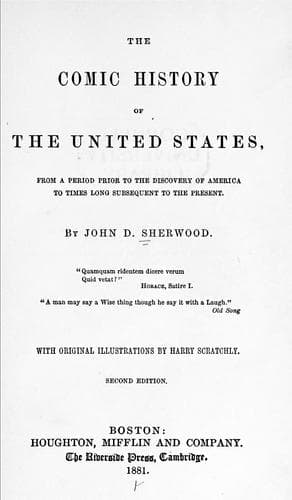
The comic history of the United States, from a period prior to the discovery of America to times long subsequent to the presentSherwood, John D.
History
The comic history of the United States, from a period prior to the discovery of America to times long subsequent to the present
Sherwood, John D.
United States -- History -- Humor
Yet while nature’s healings were already anointing the ragged wounds of
incisive war, over other and wide districts came ills which almost
defied the bungling surgeries and irregular apothecary appliances that
were wasted upon or unwisely aggravated them. In these districts
predatory bands hovered over and constantly lit upon disorganized and
broken industries, as crows cawingly follow a disrupted herd of
buffaloes or swoop upon the wounded which fall out of the straggling
march. The harryings of cattle; the plunder of farmsteads, of
bean-patches,—nursed by the patient labor of suddenly made widows,—and
even of houses seemingly secure from their proximity to villages;
wayside murders from concealed coverts; midnight shots at men asleep in
bed, or treacherously called out on pretended errands of charity, and
hewn down, frayed and fretted the lives of those who still clung to the
Union throughout the Border States. There were daily tragedies, sadder
than the tinselled shows of the stage. There were masqueraders who
danced through desultory cruelties at which even the readers of novels,
languid over ordinary stories, enkindle into activity and excitement,
and family feuds encrimsoning their way into living sorrows and
eventually into tales, which in mercy we call fictions.
The winter and spring of 1864 pendulated with balanced successes and
reverses to either combatant.
In March, General Grant was made Commander-in-Chief, and immediately set
on foot a plan to wake up the uneasy sleeper and free him from the
nightmare. This plan was to start simultaneously, and to keep in motion,
the various corps of the Federal army; Sherman’s one hundred thousand at
Chattanooga against Johnston’s army in Georgia; Banks’s and Farragut’s
in conjunction against Mobile; and Grant himself, united with Meade,
against Lee and Richmond: thus shredding, at the same time, the still
suspended cotton curtain, and preventing its busy stitchers at one point
from assisting those making repairs at another. Meade crossed the
Rapidan, May 4th, and advanced towards Richmond, giving Lee a very
lively hunt through the Wilderness for a month, and at length driving
him over the soupy and astonished Chickahominy. At the same time Grant,
holding his spirited team well in hand, drove up also towards the
Confederate capital, until he halted on the south side of the James.
Soon after, in order to divert attention from that long-coveted spot,
Richmond, General Jubal E. Early made into Maryland a raid, which he
repeated in July, but from which he was sent whirling back into the
Shenandoah valley. He renewed his experiments again in September and
October, but was finally chased out by Sheridan and his centaurs, who
seemed to mount the wind, and, on their rapid and supperless rides to
live off condensed night air.
Along the hyperborean lines rang the warning after the discomfited
Confederate:—
Public-domain text, read in full here on John Shaqi.
Reviews
Reviews
No reviews yet
Be the first to share your thoughts on this work.
Elsewhere in the archive
Join the Discussion
Join the discussion
Sign in to leave a comment or review.
Sign InorCreate an account