India -- History -- British occupation, 1765-1947 -- Fiction; Invalids -- Fiction; Simla (India) -- Fiction
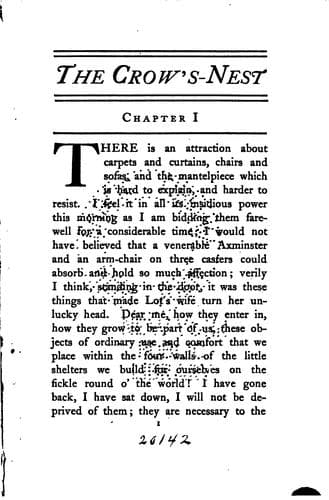
wheeling with the sun--and am once more prepared to offer you my best
attention, down upon me descends Delia, waving a parasol from afar.
I must introduce Delia; she is a vagabond and an interruption, but I
shall be extremely glad to see her.
I wonder whether anybody has ever felt the temptation of dealing quite
honestly with the thousand eyes that listen to him, and putting in
the interruptions as well as the other full-stops that occur in the
course of a morning’s work in manuscript, saying in brackets exactly
where he was compelled to leave off on account of a rose or a Delia.
One would then see precisely how far such a one’s flight carried him,
and how long, after he had been brought to earth, it took his beating
pinions to regain the ether. One might share his irritation at being
interrupted, or one might wish him interrupted oftener; it would
all depend. At all events it would give the impression of engaging
candour, and would evoke--in me, certainly--the deepest sympathy,
especially if the interruption were domestic. “Here I was compelled
to give orders for dinner.” “At this point a man brought a bill with
a cash discount on first presentation--and never again after.” “Just
then Thisbe wished to know whether or not she should send my love to
Aunt Sophia. I said _not_.” I could weep with an author who put such
things in. But instead, for the sake of dignity and smoothness, most of
them try to ignore these calamities, like painters who rub a little oil
into the edges of yesterday’s work; and go on, stifling their emotions.
There is probably a great deal of simple heroism concealed with care in
the pages of even a third-class novel.
“Are you writing something clever?” asks Delia. What a demand she makes
upon one’s reticence! “Finish it quickly and pick me some roses.” So I
finished it quickly, as you see. “I have passed this way several times
lately,” she explains, “and have always resisted the temptation of
running in. But this morning something drew me down.”
“They haven’t been properly out before,” I remark. There is no use,
after all, in being too obtuse. But I can’t go on juggling with the
present tense. Delia is gone now. I shall treat her as a historical
fact.
Public-domain text, read in full here on John Shaqi.
Reviews
Reviews
No reviews yet
Be the first to share your thoughts on this work.
Join the Discussion
Join the discussion
Sign in to leave a comment or review.
Sign InorCreate an account