India -- History -- British occupation, 1765-1947 -- Fiction; Invalids -- Fiction; Simla (India) -- Fiction
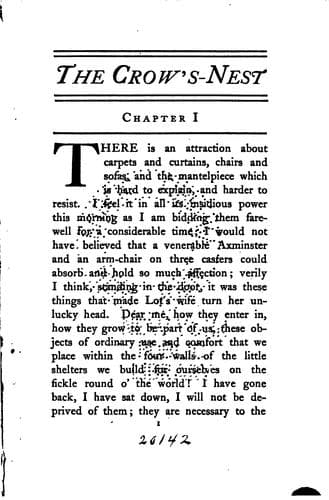
“I hope you remember what a lot you used to send me last year,” she
continued, “and how grateful I always was.” I said I remembered. “Yes,”
she sighed. “You set yourself a very good example,” and at that I got
up and sacrificed to her, with gladness; because if Delia ever suffers
cremation the last whiff of her to float sadly away will be her passion
for a rose. There are people who might dissolve in suggestion before
I would offer up a single petal, which is deplorable in me, for if
you want a thing badly enough to hint for it, you must want it very
badly indeed. Nevertheless, I think it a detestable habit, worse than
punning; and nothing rouses in me a spirit of fiercer, more implacable
opposition than a polite, gentle, well-considered hint. Delia, of
course, doesn’t hint, she prods, and you accept her elbow with delight,
sharing the broad and conscious humour of it.
I am glad Delia dropped in, I want to talk about her; she holds to me
so much of the charm of this irresponsible impious little Paradise
that we have made for ourselves up here above the clouds and connected
by wire with Westminster. A wire is not a very substantial thing, and
that, if you leave out Mr. Kipling, is all that attaches us to the
rest of the world. If an ill-disposed person, the Mullah Powindah or
another, should one day cut it, we might float off anywhere, and be
hardly more unrelated to the planet we should lodge upon than we are
to our own. The founders of Simla--may they dwell in beatitude for
ever--saw their golden chance and took it. Far in and far up they
climbed to build it, and not being gods, but only men, they thought
well to leave the more obvious forms of misery out of their survey
plans. They brought with them many desirable things, not quite
enough, but many; poverty and sorrow and age they left at the bottom
of the hill. They barred out greed and ruin by forbidding speculation;
they warned off the spectre of decrepitude by the “age limit” which
sends you after fifty-five to whiten and perish elsewhere. This is an
ordinance that many call divine, for want of a better word, but there
ought to be a better word. They made it so expensive that the widow
in her black takes the first ship to Balham, and so attractive that
the widower promptly marries again. But they also arranged with Death
that he should seldom show himself upon the Mall, so nobody has rue to
wear, even with a difference. From ten to five we compose Blue Books,
at least our husbands do; the rest of the time we gallop about on
little country-bred ponies, and vigorously dance, even to fifty-four
years, eleven months, and thirty days; and with full hearts and empty
heads--and this is the consummation of bliss--congratulate ourselves.
There are houses where they play games after dinner. I myself before I
became the dryadess of a pencil-cedar, have played games after dinner,
and felt as innocent and expansive as I did at nine.
Public-domain text, read in full here on John Shaqi.
Reviews
Reviews
No reviews yet
Be the first to share your thoughts on this work.
Join the Discussion
Join the discussion
Sign in to leave a comment or review.
Sign InorCreate an account