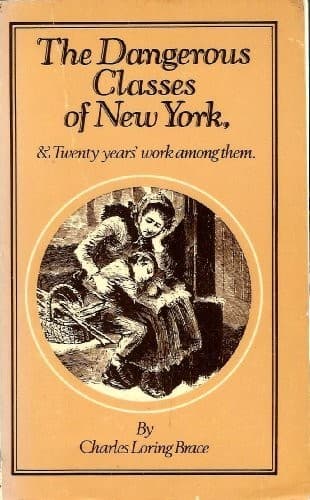
The Dangerous Classes of New York, and Twenty Years' Work Among ThemBrace, Charles Loring
History
The Dangerous Classes of New York, and Twenty Years' Work Among Them
Brace, Charles Loring
Child welfare -- New York (State) -- New York; New York (N.Y.) -- Social conditions; Poor -- New York (State) -- New York
The advocates of the license system would still reply, however, that
such a hospital would not meet the evil; that Law only can separate the
sickly from the healthy, and thus guard society from the pestilence; and
the only law which could accomplish this would be a strict system of
license. The friend of public order, however, would urge that a wise
legislator cannot consider physical well-being alone: he must regard
also the moral tendencies of laws; and the influence of a license system
for prostitution is plainly toward recognizing this offense as legal or
permissible. It removes indirectly one of the safeguards of virtue.
Perhaps the _reductio ad absurdum_ in the relation of the State with a
criminal class, and of the Church with the State, was never so absurdly
shown as in the Berlin license laws for prostitutes, twenty years since.
According to these, in their final result, no woman could be a
prostitute who had not partaken of the communion!--that is, the
_Schein,_ or license, was never given to this business any more than to
any other, except on evidence of the person's having been "confirmed,"
or being a member of the State Church, that is, a citizen! This
classing, however, the trade of prostitution with peddling, or any other
business needing a license, did not in the least tend, so far as we have
ever heard, to elevate the women, or save them from moral and mental
degradation. On the contrary, the universal law of Providence that man
or woman must live by labor, and that any unnatural substitute for it
saps and weakens all power and vigor, applies to this class in
Continental cities as much as here. Without doubt, too, wherever the
Germanic races are, no degree of legalizing this traffic can utterly do
away with the public sentence of scorn against the female participants
in it; and the contempt of the virtuous naturally depresses the
vicious.
The "public woman" has a far greater chance of recovery in France or
Italy than in Germany, England, or America. Still, the wise legislator,
though regretting the depression which this public sentiment causes to
the vicious classes, cannot but value it as a safeguard of virtue, and
will be very cautious how he weakens it by legislation.
Public-domain text, read in full here on John Shaqi.
Reviews
Reviews
No reviews yet
Be the first to share your thoughts on this work.
Elsewhere in the archive
Join the Discussion
Join the discussion
Sign in to leave a comment or review.
Sign InorCreate an account