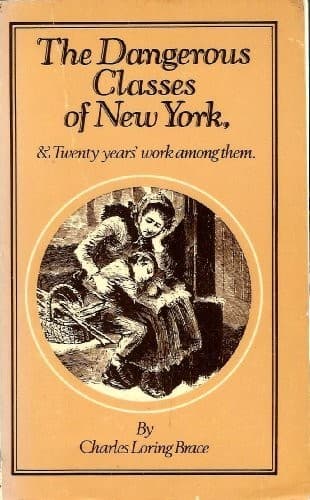
The Dangerous Classes of New York, and Twenty Years' Work Among ThemBrace, Charles Loring
History
The Dangerous Classes of New York, and Twenty Years' Work Among Them
Brace, Charles Loring
Child welfare -- New York (State) -- New York; New York (N.Y.) -- Social conditions; Poor -- New York (State) -- New York
Few had shoes, all were bonnetless, their dresses were torn, ragged, and
dirty; their hair tangled, and faces long unwashed; they had, many of
them, a singularly wild and intense expression of eye and feature, as of
half-tamed creatures, with passions aroused beyond their years.
The dress and ornaments of the ladies seemed to excite their admiration
greatly. It was observed that they soon hid or softened their own worst
peculiarities. They evidently could not at first understand the motive
which led so many of a far higher and better class to come to help them.
The two regular and salaried teachers took the discipline in hand gently
and firmly. The ladies soon had their little classes, each gathered
quietly about the one instructing. As a general thing, the ladies took
upon themselves the industrial branches--sewing, knitting, crocheting,
and the like; this gave them also excellent opportunities for moral
instruction, and winning the sympathy of the children.
As these ladies, many of them of remarkable character and culture, began
to show the fruits of a high civilization to these poor little
barbarians, the thought seemed to strike them--though hardly capable of
being expressed--that here was a goodness and piety they had never known
or conceived. This offspring of poverty and crime veiled their vices and
bad habits before these angels. They felt a new impulse--to be worthy of
their noble friends. The idea of unselfish Love dawned on their souls;
they softened and became respectful. So it continued; each day the wild
little beggars became more disciplined and controlled; they began to
like study and industry; they were more anxious to be clean and neatly
dressed; they checked their tongues, and, in some degree, their tempers;
they showed affection and gratitude to their teachers; their minds
awakened; most of all, their moral faculties. The truths of Religion or
of morals, especially when dramatized in stories and incidents, reached
them.
And no words can adequately picture the amount of loving service and
patient sacrifice which was poured out by these ladies in this effort
among the poor of the Fourth Ward. They never spared themselves or their
means. Some came down every day to help in the school; some twice in the
week; they were there in all weathers, and never wearied. Three of the
number offered up their lives in these labors of humanity, and died in
harness.
Public-domain text, read in full here on John Shaqi.
Reviews
Reviews
No reviews yet
Be the first to share your thoughts on this work.
Elsewhere in the archive
Join the Discussion
Join the discussion
Sign in to leave a comment or review.
Sign InorCreate an account