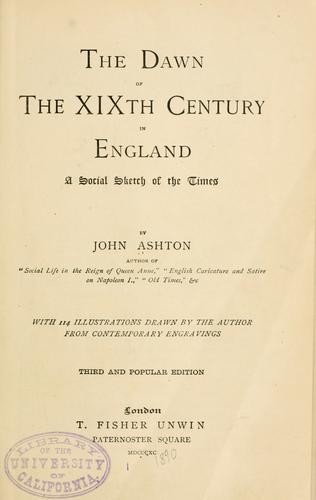
The Dawn of the XIXth Century in England: A social sketch of the timesAshton, John
History
The Dawn of the XIXth Century in England: A social sketch of the times
Ashton, John
England -- Social life and customs -- 19th century
O. P. represents “Old Prices,” and, as the management of the new
theatre had raised the price of their entertainment, as they had a
perfect right to do, these people demanded that only the old prices
should be charged for admission. It was in vain that it was pointed out
that very early notice was given of the intended rise, as indeed it
was, directly after the destruction of the fire—_vide_ _Morning Post_,
September 24, 1808: “The Managers, we understand, intend to raise the
price of admission, when they open at the Opera to 7s. for the boxes,
and to 4s. for the pit. The admission for the galleries to remain as
before. Much clamour has already been excited against this innovation,
but we think unjustly.”
[Illustration: MADAME CATALANI.]
Had this been the only grumble, probably no more would have been heard
of it, but all sorts of rumours got about—That the proprietors, of
whom Kemble was one (and, except on the stage, he was not popular),
would make a handsome profit out of the insurance, and sale of old
materials; that the increased number of private boxes, with their
ante-rooms, were built for the special purpose of serving as places of
assignation for a debauched aristocracy; and, therefore, a virtuous
public ought to rise in its wrath against them. And last, but not
least, they tried to enlist patriotic feelings into the question, and
appealed to the passions of the mob—(remember we were at war with the
French, and the ignorant public could not discriminate much between
the nationality of foreigners) as to whether it was fair to pay such
enormous nightly sums to a foreigner—which sums were partly the cause
of the rise in price—when native talent was going unappreciated.
This foreigner was Madame Angelica Catalani, a lady who was born at
Sinigaglia, in 1779. At the early age of twelve, when at the convent
of St. Lucia, at Gubbio, her beautiful voice was remarkable, and when
she left the convent, at the age of fifteen, she was compelled to get a
living on the stage, owing to her father’s ruin.
Public-domain text, read in full here on John Shaqi.
Reviews
Reviews
No reviews yet
Be the first to share your thoughts on this work.
Elsewhere in the archive
Join the Discussion
Join the discussion
Sign in to leave a comment or review.
Sign InorCreate an account