The Divorce of Catherine of Aragon: The Story as Told by the Imperial Ambassadors Resident at the Court of Henry VIII — John Shaqi
The Divorce of Catherine of Aragon: The Story as Told by the Imperial Ambassadors Resident at the Court of Henry VIIIFroude, James Anthony
History
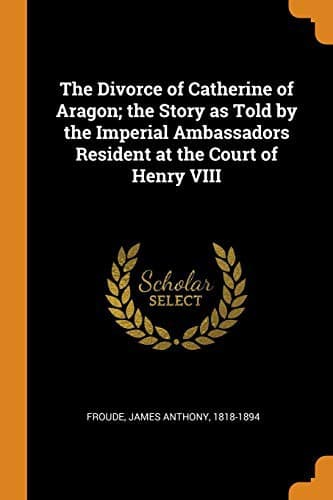
The Divorce of Catherine of Aragon: The Story as Told by the Imperial Ambassadors Resident at the Court of Henry VIII
Froude, James Anthony
Catharine, of Aragon, Queen, consort of Henry VIII, King of England, 1485-1536 -- Divorce; Divorce -- Great Britain -- History -- 16th century; Great Britain -- History -- Henry VIII, 1509-1547 -- Biography; Great Britain -- Kings and rulers -- Biography; Henry VIII, King of England, 1491-1547 -- Di
In the year 1526 the political prospects of England became seriously
clouded. A disputed succession had led in the previous century to a
desperate civil war. In that year it became known in private circles that
if Henry VIII. was to die the realm would again be left without a certain
heir, and that the strife of the Roses might be renewed on an even more
distracting scale. The sons who had been born to Queen Catherine had died
in childbirth or had died immediately after it. The passionate hope of the
country that she might still produce a male child who would survive had
been constantly disappointed, and now could be entertained no longer. She
was eight years older than her husband. She had "certain diseases" which
made it impossible that she should be again pregnant, and Henry had for
two years ceased to cohabit with her. He had two children still
living--the Princess Mary, Catherine's daughter, then a girl of eleven,
and an illegitimate son born in 1519, the mother being a daughter of Sir
John Blount, and married afterwards to Sir Gilbert Talboys. By
presumptive law the Princess was the next heir; but no woman had ever sat
on the throne of England alone and in her own right, and it was doubtful
whether the nation would submit to a female sovereign. The boy, though
excluded by his birth from the prospect of the crown, was yet brought up
with exceptional care, called a prince by his tutors, and probably
regarded by his father as a possible successor should his sister go the
way of her brothers. In 1525, after the King had deliberately withdrawn
from Catherine, he was created Duke of Richmond--a title of peculiar
significance, since it had been borne by his grandfather, Henry VII.--and
he was granted precedence over the rest of the peerage. Illegitimacy was a
serious, but, it might be thought, was not an absolute, bar. The Conqueror
had been himself a bastard. The Church, by its habits of granting
dispensations for irregular marriages or of dissolving them on pleas of
affinity or consanguinity or other pretext, had confused the distinction
between legitimate and illegitimate. A Church Court had illegitimatised
the children of Edward IV. and Elizabeth Grey, on the ground of one of
Edward's previous connections; yet no one regarded the princes murdered in
the Tower as having been illegitimate in reality; and to prevent disputes
and for an adequate object, the Duke of Richmond, had he grown to manhood,
might, in the absence of other claims, have been recognised by Parliament.
But the Duke was still a child, and might die as Henry's other sons had
died; and other claims there were which, in the face of the bar sinister,
could not fail to be asserted. James V. of Scotland was next in blood,
being the son of Henry's eldest sister, Margaret. There were the Greys,
inheriting from the second sister, Mary. Outside the royal house there
were the still popular representatives of the White Rose, the Marquis of
Reviews
Reviews
No reviews yet
Be the first to share your thoughts on this work.
Join the Discussion
Join the discussion
Sign in to leave a comment or review.
Sign InorCreate an account