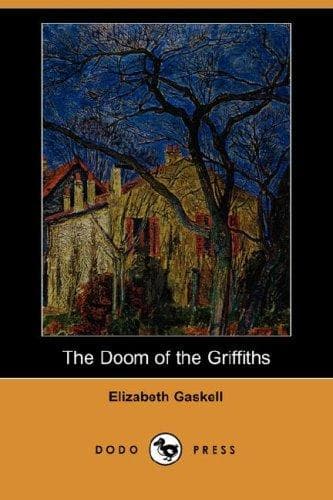
The Doom of the GriffithsGaskell, Elizabeth Cleghorn
General
The Doom of the Griffiths
Gaskell, Elizabeth Cleghorn
England -- Social life and customs -- 19th century -- Fiction; Horror tales, English
were too short to meet over the small pearly teeth. The nose was the
most defective feature; but the eyes were splendid. They were so long,
so lustrous, yet at times so very soft under their thick fringe of
eyelash! The nut-brown hair was carefully braided beneath the border of
delicate lace: it was evident the little village beauty knew how to make
the most of all her attractions, for the gay colours which were displayed
in her neckerchief were in complete harmony with the complexion.
Owen was much attracted, while yet he was amused, by the evident coquetry
the girl displayed, collecting around her a whole bevy of young fellows,
for each of whom she seemed to have some gay speech, some attractive look
or action. In a few minutes young Griffiths of Bodowen was at her side,
brought thither by a variety of idle motives, and as her undivided
attention was given to the Welsh heir, her admirers, one by one, dropped
off, to seat themselves by some less fascinating but more attentive fair
one. The more Owen conversed with the girl, the more he was taken; she
had more wit and talent than he had fancied possible; a self-abandon and
thoughtfulness, to boot, that seemed full of charms; and then her voice
was so clear and sweet, and her actions so full of grace, that Owen was
fascinated before he was well aware, and kept looking into her bright,
blushing face, till her uplifted flashing eye fell beneath his earnest
gaze.
While it thus happened that they were silent—she from confusion at the
unexpected warmth of his admiration, he from an unconsciousness of
anything but the beautiful changes in her flexile countenance—the man
whom Owen took for her father came up and addressed some observation to
his daughter, from whence he glided into some commonplace though
respectful remark to Owen, and at length engaging him in some slight,
local conversation, he led the way to the account of a spot on the
peninsula of Penthryn, where teal abounded, and concluded with begging
Owen to allow him to show him the exact place, saying that whenever the
young Squire felt so inclined, if he would honour him by a call at his
house, he would take him across in his boat. While Owen listened, his
attention was not so much absorbed as to be unaware that the little
beauty at his side was refusing one or two who endeavoured to draw her
from her place by invitations to dance. Flattered by his own
construction of her refusals, he again directed all his attention to her,
till she was called away by her father, who was leaving the scene of
festivity. Before he left he reminded Owen of his promise, and added—
“Perhaps, sir, you do not know me. My name is Ellis Pritchard, and I
live at Ty Glas, on this side of Moel Gêst; anyone can point it out to
you.”
Public-domain text, read in full here on John Shaqi.
Reviews
Reviews
No reviews yet
Be the first to share your thoughts on this work.
Join the Discussion
Join the discussion
Sign in to leave a comment or review.
Sign InorCreate an account