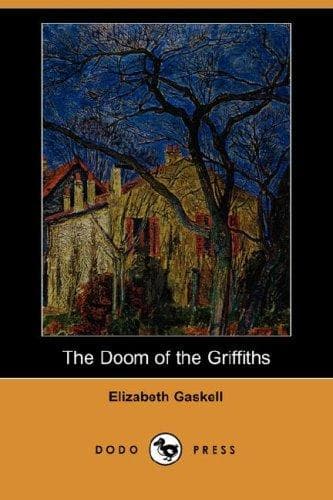
The Doom of the GriffithsGaskell, Elizabeth Cleghorn
General
The Doom of the Griffiths
Gaskell, Elizabeth Cleghorn
England -- Social life and customs -- 19th century -- Fiction; Horror tales, English
Probably, when the household at Bodowen rose that morning, there was but
one among them ignorant of the heir’s relation to Nest Pritchard and her
child; for secret as he tried to make his visits to Ty Glas, they had
been too frequent not to be noticed, and Nest’s altered conduct—no longer
frequenting dances and merry-makings—was a strongly corroborative
circumstance. But Mrs. Griffiths’ influence reigned paramount, if
unacknowledged, at Bodowen, and till she sanctioned the disclosure, none
would dare to tell the Squire.
Now, however, the time drew near when it suited her to make her husband
aware of the connection his son had formed; so, with many tears, and much
seeming reluctance, she broke the intelligence to him—taking good care,
at the same time, to inform him of the light character Nest had borne.
Nor did she confine this evil reputation to her conduct before her
marriage, but insinuated that even to this day she was a “woman of the
grove and brake”—for centuries the Welsh term of opprobrium for the
loosest female characters.
Squire Griffiths easily tracked Owen to Ty Glas; and without any aim but
the gratification of his furious anger, followed him to upbraid as we
have seen. But he left the cottage even more enraged against his son
than he had entered it, and returned home to hear the evil suggestions of
the stepmother. He had heard a slight scuffle in which he caught the
tones of Robert’s voice, as he passed along the hall, and an instant
afterwards he saw the apparently lifeless body of his little favourite
dragged along by the culprit Owen—the marks of strong passion yet visible
on his face. Not loud, but bitter and deep were the evil words which the
father bestowed on the son; and as Owen stood proudly and sullenly
silent, disdaining all exculpation of himself in the presence of one who
had wrought him so much graver—so fatal an injury—Robert’s mother entered
the room. At sight of her natural emotion the wrath of the Squire was
redoubled, and his wild suspicions that this violence of Owen’s to Robert
was a premeditated act appeared like the proven truth through the mists
of rage. He summoned domestics as if to guard his own and his wife’s
life from the attempts of his son; and the servants stood wondering
around—now gazing at Mrs. Griffiths, alternately scolding and sobbing,
while she tried to restore the lad from his really bruised and
half-unconscious state; now at the fierce and angry Squire; and now at
the sad and silent Owen. And he—he was hardly aware of their looks of
wonder and terror; his father’s words fell on a deadened ear; for before
his eyes there rose a pale dead babe, and in that lady’s violent sounds
of grief he heard the wailing of a more sad, more hopeless mother. For
by this time the lad Robert had opened his eyes, and though evidently
suffering a good deal from the effects of Owen’s blows, was fully
conscious of all that was passing around him.
Public-domain text, read in full here on John Shaqi.
Reviews
Reviews
No reviews yet
Be the first to share your thoughts on this work.
Join the Discussion
Join the discussion
Sign in to leave a comment or review.
Sign InorCreate an account