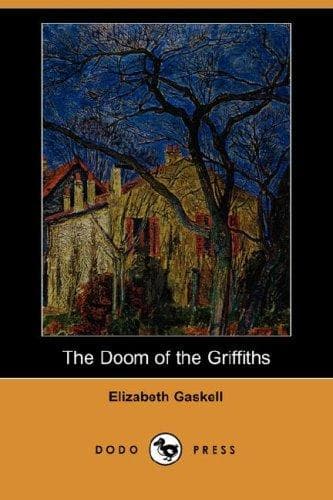
The Doom of the GriffithsGaskell, Elizabeth Cleghorn
General
The Doom of the Griffiths
Gaskell, Elizabeth Cleghorn
England -- Social life and customs -- 19th century -- Fiction; Horror tales, English
not render Owen unamiable, but it made him wilful, and not a happy child.
He had a thoughtful look, not common to the face of a young boy. He knew
no games, no merry sports; his information was of an imaginative and
speculative character. His father delighted to interest him in his own
studies, without considering how far they were healthy for so young a
mind.
Of course Squire Griffiths was not unaware of the prophecy which was to
be fulfilled in his generation. He would occasionally refer to it when
among his friends, with sceptical levity; but in truth it lay nearer to
his heart than he chose to acknowledge. His strong imagination rendered
him peculiarly impressible on such subjects; while his judgment, seldom
exercised or fortified by severe thought, could not prevent his
continually recurring to it. He used to gaze on the half-sad countenance
of the child, who sat looking up into his face with his large dark eyes,
so fondly yet so inquiringly, till the old legend swelled around his
heart, and became too painful for him not to require sympathy. Besides,
the overpowering love he bore to the child seemed to demand fuller vent
than tender words; it made him like, yet dread, to upbraid its object for
the fearful contrast foretold. Still Squire Griffiths told the legend,
in a half-jesting manner, to his little son, when they were roaming over
the wild heaths in the autumn days, “the saddest of the year,” or while
they sat in the oak-wainscoted room, surrounded by mysterious relics that
gleamed strangely forth by the flickering fire-light. The legend was
wrought into the boy’s mind, and he would crave, yet tremble, to hear it
told over and over again, while the words were intermingled with caresses
and questions as to his love. Occasionally his loving words and actions
were cut short by his father’s light yet bitter speech—“Get thee away, my
lad; thou knowest not what is to come of all this love.”
Public-domain text, read in full here on John Shaqi.
Reviews
Reviews
No reviews yet
Be the first to share your thoughts on this work.
Join the Discussion
Join the discussion
Sign in to leave a comment or review.
Sign InorCreate an account