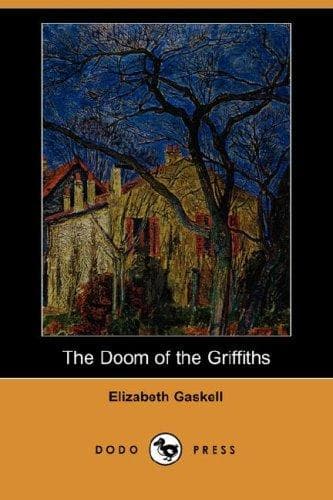
The Doom of the GriffithsGaskell, Elizabeth Cleghorn
General
The Doom of the Griffiths
Gaskell, Elizabeth Cleghorn
England -- Social life and customs -- 19th century -- Fiction; Horror tales, English
When Augharad was seventeen, and Owen eleven or twelve, the rector of the
parish in which Bodowen was situated, endeavoured to prevail on Squire
Griffiths to send the boy to school. Now, this rector had many congenial
tastes with his parishioner, and was his only intimate; and, by repeated
arguments, he succeeded in convincing the Squire that the unnatural life
Owen was leading was in every way injurious. Unwillingly was the father
wrought to part from his son; but he did at length send him to the
Grammar School at Bangor, then under the management of an excellent
classic. Here Owen showed that he had more talents than the rector had
given him credit for, when he affirmed that the lad had been completely
stupefied by the life he led at Bodowen. He bade fair to do credit to
the school in the peculiar branch of learning for which it was famous.
But he was not popular among his schoolfellows. He was wayward, though,
to a certain degree, generous and unselfish; he was reserved but gentle,
except when the tremendous bursts of passion (similar in character to
those of his father) forced their way.
On his return from school one Christmas-time, when he had been a year or
so at Bangor, he was stunned by hearing that the undervalued Augharad was
about to be married to a gentleman of South Wales, residing near
Aberystwith. Boys seldom appreciate their sisters; but Owen thought of
the many slights with which he had requited the patient Augharad, and he
gave way to bitter regrets, which, with a selfish want of control over
his words, he kept expressing to his father, until the Squire was
thoroughly hurt and chagrined at the repeated exclamations of “What shall
we do when Augharad is gone?” “How dull we shall be when Augharad is
married!” Owen’s holidays were prolonged a few weeks, in order that he
might be present at the wedding; and when all the festivities were over,
and the bride and bridegroom had left Bodowen, the boy and his father
really felt how much they missed the quiet, loving Augharad. She had
performed so many thoughtful, noiseless little offices, on which their
daily comfort depended; and now she was gone, the household seemed to
miss the spirit that peacefully kept it in order; the servants roamed
about in search of commands and directions, the rooms had no longer the
unobtrusive ordering of taste to make them cheerful, the very fires
burned dim, and were always sinking down into dull heaps of gray ashes.
Altogether Owen did not regret his return to Bangor, and this also the
mortified parent perceived. Squire Griffiths was a selfish parent.
Letters in those days were a rare occurrence. Owen usually received one
during his half-yearly absences from home, and occasionally his father
paid him a visit. This half-year the boy had no visit, nor even a
letter, till very near the time of his leaving school, and then he was
astounded by the intelligence that his father was married again.
Public-domain text, read in full here on John Shaqi.
Reviews
Reviews
No reviews yet
Be the first to share your thoughts on this work.
Join the Discussion
Join the discussion
Sign in to leave a comment or review.
Sign InorCreate an account