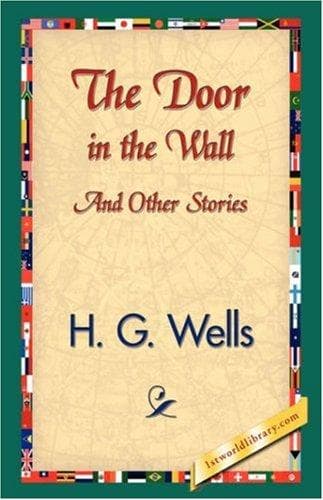
The Door in the Wall, and Other StoriesWells, H. G. (Herbert George)
Science
The Door in the Wall, and Other Stories
Wells, H. G. (Herbert George)
Fantasy fiction, English; Science fiction, English; Short stories
“He glanced at her, as though almost he would appeal to her. Then he
asked me suddenly if I had heard of a great and avenging declaration
that Evesham had made? Now, Evesham had always before been the man next
to myself in the leadership of that great party in the north. He was a
forcible, hard, and tactless man, and only I had been able to control
and soften him. It was on his account even more than my own, I think,
that the others had been so dismayed at my retreat. So this question
about what he had done reawakened my old interest in the life I had put
aside just for a moment.
“‘I have taken no heed of any news for many days,’ I said. What has
Evesham been saying?’
“And with that the man began, nothing loth, and I must confess even I
was struck by Evesham’s reckless folly in the wild and threatening
words he had used. And this messenger they had sent to me not only told
me of Evesham’s speech, but went on to ask counsel and to point out
what need they had of me. While he talked, my lady sat a little forward
and watched his face and mine.
“My old habits of scheming and organising reasserted themselves. I
could even see myself suddenly returning to the north, and all the
dramatic effect of it. All that this man said witnessed to the disorder
of the party indeed, but not to its damage. I should go back stronger
than I had come. And then I thought of my lady. You see—how can I tell
you? There were certain peculiarities of our relationship—as things are
I need not tell you about that—which would render her presence with me
impossible. I should have had to leave her; indeed, I should have had
to renounce her clearly and openly, if I was to do all that I could do
in the north. And the man knew that, even as he talked to her and me,
knew it as well as she did, that my steps to duty were—first,
separation, then abandonment. At the touch of that thought my dream of
a return was shattered. I turned on the man suddenly, as he was
imagining his eloquence was gaining ground with me.
“‘What have I to do with these things now?’ I said. ‘I have done with
them. Do you think I am coquetting with your people in coming here?’
“‘No,’ he said. ‘But—’
“‘Why cannot you leave me alone. I have done with these things. I have
ceased to be anything but a private man.’
“‘Yes,’ he answered. ‘But have you thought?—this talk of war, these
reckless challenges, these wild aggressions—’
“I stood up.
“‘No,’ I cried. ‘I won’t hear you. I took count of all those things, I
weighed them—and I have come away.’
“He seemed to consider the possibility of persistence. He looked from
me to where the lady sat regarding us.
“‘War,’ he said, as if he were speaking to himself, and then turned
slowly from me and walked away.
“I stood, caught in the whirl of thoughts his appeal had set going.
“I heard my lady’s voice.
“‘Dear,’ she said; ‘but if they had need of you—’
Public-domain text, read in full here on John Shaqi.
Reviews
Reviews
No reviews yet
Be the first to share your thoughts on this work.
Join the Discussion
Join the discussion
Sign in to leave a comment or review.
Sign InorCreate an account