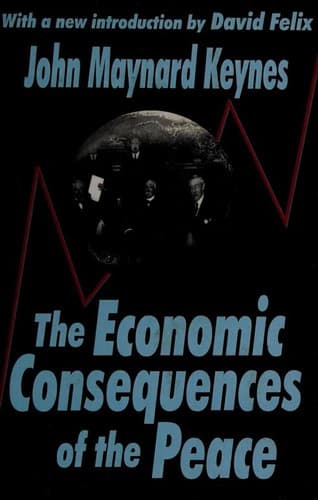
The Economic Consequences of the PeaceKeynes, John Maynard
History
The Economic Consequences of the Peace
Keynes, John Maynard
Economic history -- 1918-1945; Treaty of Versailles (1919 June 28); World War, 1914-1918 -- Economic aspects
In writing thus I do not necessarily disparage the practices of that
generation. In the unconscious recesses of its being Society knew what
it was about. The cake was really very small in proportion to the
appetites of consumption, and no one, if it were shared all round, would
be much the better off by the cutting of it. Society was working not
for the small pleasures of to-day but for the future security and
improvement of the race,--in fact for "progress." If only the cake were
not cut but was allowed to grow in the geometrical proportion predicted
by Malthus of population, but not less true of compound interest,
perhaps a day might come when there would at last be enough to go round,
and when posterity could enter into the enjoyment of _our_ labors. In
that day overwork, overcrowding, and underfeeding would have come to an
end, and men, secure of the comforts and necessities of the body, could
proceed to the nobler exercises of their faculties. One geometrical
ratio might cancel another, and the nineteenth century was able to
forget the fertility of the species in a contemplation of the dizzy
virtues of compound interest.
There were two pitfalls in this prospect: lest, population still
outstripping accumulation, our self-denials promote not happiness but
numbers; and lest the cake be after all consumed, prematurely, in war,
the consumer of all such hopes.
But these thoughts lead too far from my present purpose. I seek only to
point out that the principle of accumulation based on inequality was a
vital part of the pre-war order of Society and of progress as we then
understood it, and to emphasize that this principle depended on unstable
psychological conditions, which it may be impossible to recreate. It
was not natural for a population, of whom so few enjoyed the comforts of
life, to accumulate so hugely. The war has disclosed the possibility of
consumption to all and the vanity of abstinence to many. Thus the bluff
is discovered; the laboring classes may be no longer willing to forego
so largely, and the capitalist classes, no longer confident of the
future, may seek to enjoy more fully their liberties of consumption so
long as they last, and thus precipitate the hour of their confiscation.
IV. _The Relation of the Old World to the New_
The accumulative habits of Europe before the war were the necessary
condition of the greatest of the external factors which maintained the
European equipoise.
Public-domain text, read in full here on John Shaqi.
Reviews
Reviews
No reviews yet
Be the first to share your thoughts on this work.
Join the Discussion
Join the discussion
Sign in to leave a comment or review.
Sign InorCreate an account