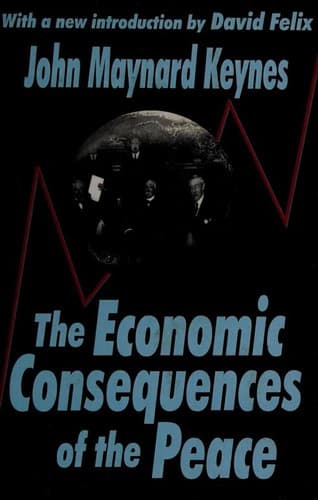
The Economic Consequences of the PeaceKeynes, John Maynard
History
The Economic Consequences of the Peace
Keynes, John Maynard
Economic history -- 1918-1945; Treaty of Versailles (1919 June 28); World War, 1914-1918 -- Economic aspects
I doubt this view of the world. Even capitalism at home, which engages
many local sympathies, which plays a real part in the daily process of
production, and upon the security of which the present organization of
society largely depends, is not very safe. But however this may be, will
the discontented peoples of Europe be willing for a generation to come
so to order their lives that an appreciable part of their daily produce
may be available to meet a foreign payment, the reason of which, whether
as between Europe and America, or as between Germany and the rest of
Europe, does not spring compellingly from their sense of justice or
duty?
On the one hand, Europe must depend in the long run on her own daily
labor and not on the largesse of America; but, on the other hand, she
will not pinch herself in order that the fruit of her daily labor may go
elsewhere. In short, I do not believe that any of these tributes will
continue to be paid, at the best, for more than a very few years. They
do not square with human nature or agree with the spirit of the age.
If there is any force in this mode of thought, expediency and generosity
agree together, and the policy which will best promote immediate
friendship between nations will not conflict with the permanent
interests of the benefactor.[168]
3. _An International Loan_
I pass to a second financial proposal. The requirements of Europe are
_immediate_. The prospect of being relieved of oppressive interest
payments to England and America over the whole life of the next two
generations (and of receiving from Germany some assistance year by year
to the costs of restoration) would free the future from excessive
anxiety. But it would not meet the ills of the immediate present,--the
excess of Europe's imports over her exports, the adverse exchange, and
the disorder of the currency. It will be very difficult for European
production to get started again without a temporary measure of external
assistance. I am therefore a supporter of an international loan in some
shape or form, such as has been advocated in many quarters in France,
Germany, and England, and also in the United States. In whatever way the
ultimate responsibility for repayment is distributed, the burden of
finding the immediate resources must inevitably fall in major part upon
the United States.
Public-domain text, read in full here on John Shaqi.
Reviews
Reviews
No reviews yet
Be the first to share your thoughts on this work.
Elsewhere in the archive
Join the Discussion
Join the discussion
Sign in to leave a comment or review.
Sign InorCreate an account